Tag: construction

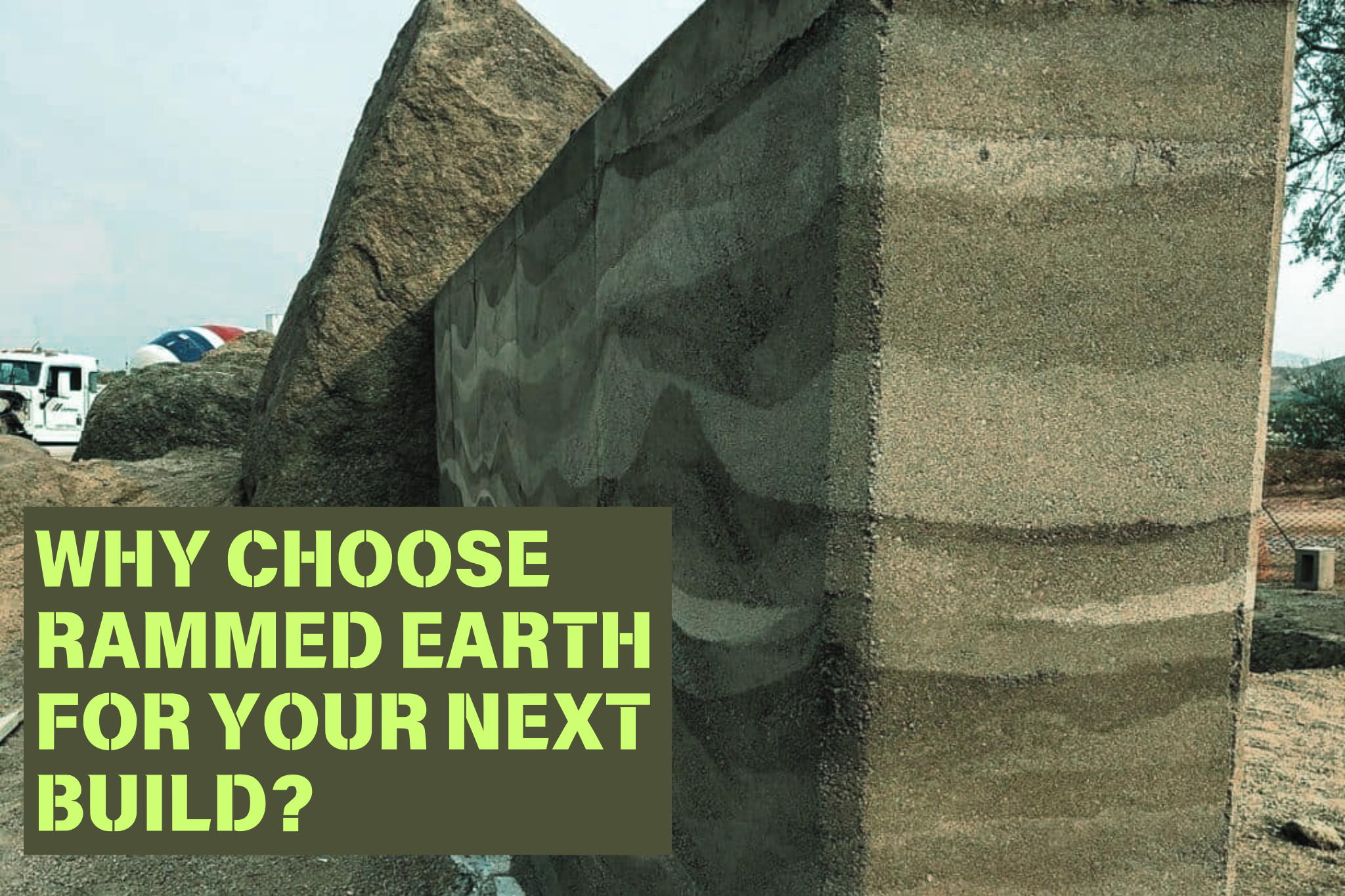
  • Why Choose Rammed Earth for Your Next Build?

    Why Choose Rammed Earth for Your Next Build?

    Discover the full guide to rammed earth construction in 2024. Learn about benefits, costs, sustainability, and how this ancient building technique is revolutionizing modern architecture.

    Modern rammed earth home in Arizona showcasing natural layered patterns and large windows. This home demonstrates the perfect blend of traditional techniques with contemporary architecture.Kendle Design Collaborative.

    Walking through a rammed earth home for the first time was a revelation I’ll never forget. The walls had distinct layers of compressed soil. These created natural art patterns. They maintained a perfect temperature despite the scorching summer heat outside. That was ten years ago, and it completely changed my perspective on sustainable architecture. Did you know that rammed earth structures can last over 1,000 years? The Great Wall of China’s oldest sections, built using this technique, stand as testament to its durability!

    What is Rammed Earth Construction?

    Cross-section diagram showing the layers of a rammed earth wall, including stabilizers and reinforcement elements.

    Think of rammed earth as nature’s concrete. This ancient building technique involves compacting layers of earth mixture between forms to create solid, durable walls. Don’t let its age fool you. Modern rammed earth construction has evolved significantly. It still maintains its core sustainable principles.

    Key components of rammed earth construction include:

    • Local soil (typically 70% sand and gravel, 30% clay)
    • Natural stabilizers (sometimes small amounts of cement or lime)
    • Mechanical compactors
    • Firework systems
    • Skilled labor and skill

    I’ve seen projects where builders sourced over 80% of their materials directly from the construction site. This approach significantly reduces transportation costs. It also lowers the carbon footprint!

    The Environmental Impact: Why Earth Matters

    Infographic comparing CO2 emissions: Conventional concrete(Insulated CMU) vs. rammed earth construction.researchgate.net

    The environmental benefits of rammed earth construction are frankly astounding. Let me break this down with some real numbers I’ve gathered over years of research:

    • Carbon Footprint Reduction:
    • Up to 90% less CO2 emissions compared to conventional concrete construction
    • Zero waste production when using on-site soil
    • Minimal transportation emissions with local materials
    • Energy Efficiency:
    • 40-50% reduction in heating/cooling costs
    • Natural temperature regulation
    • Superior insulation properties
    Local soil testing and choosing process for sustainable rammed earth construction.link.springer.com

    Here’s what truly amazes me: a properly constructed rammed earth wall can last centuries while maintaining its thermal properties. I’ve visited homes in Arizona. Indoor temperatures stay around 72°F (22°C) with minimal air conditioning. This is remarkable when it’s 100°F (38°C) outside!

    The Real Benefits: Beyond Environmental Impact

    Interior shot of a rammed earth home showing natural texture patterns and color variations in wall surfaces.
    Interior shot of a rammed earth home showing natural texture patterns and color variations in wall surfaces.rammedearthenterprises.com.au

    I have worked with various sustainable building approaches. I can confidently say that rammed earth offers unique advantages. Other Eco-friendly options can’t match these advantages.

    Durability and Strength

    • Compression strength comparable to concrete
    • Fire-resistant properties
    • Pest-resistant
    • Weather-resistant
    • Earthquake-resistant when properly reinforced
    Interior shot of a rammed earth home showing natural texture patterns and color variations in wall surfaces.
    Interior shot of a rammed earth home showing natural texture patterns and color variations in wall surfaces.rammedearthenterprises.com.au

    Health and Comfort Benefits:

    • Natural humidity regulation
    • Zero VOC emissions
    • Excellent sound insulation (perfect for urban settings!)
    • Allergen-free environment
    • Better indoor air quality

    One of my clients is a family with severe allergies. They reported total relief from symptoms within weeks of moving into their rammed earth home. The natural materials and absence of synthetic building products made a dramatic difference in their quality of life.

    Cost Considerations: The Truth About Rammed Earth

    Let’s talk numbers. While beginning costs can be 5-15% higher than conventional construction, the long-term savings are significant:

    Cost per m2 for a rammed earth home and rammed earth wall .Courtesy:.rammedearthenterprises.com.au/

    Beginning Costs (Based on 2024 Data):

    • Labor: $150-300 per square meter
    • Materials: $50-100 per square meter (significantly less if using on-site soil)
    • Equipment: $5,000-15,000 for basic setup

    Long-term Savings:

    • Energy costs reduced by up to 45% annually
    • Maintenance costs near zero for first 25 years
    • Insurance premiums often lower due to durability
    • Property value increase of 10-20% (based on recent market analysis)

    Pro Tip: I’ve found that the sweet spot for cost efficiency is a project between 1,500-2,500 square feet. This size allows for optimal use of equipment and labor while maintaining quality control.

    The Construction Process: What to Expect

    Team of workers demonstrating proper compaction techniques with modern equipment.
    Team of workers demonstrating proper compaction techniques with modern equipment.link.springer.com

    Having overseen many rammed earth projects, I can tell you that proper planning is crucial. Here’s what the process typically looks like:

    1. Site Assessment and Soil Testing:
    • Soil composition analysis
    • Structural requirements evaluation
    • Climate considerations
    • Local building code review
    1. Material Preparation:
    • Soil screening and mixing
    • Moisture content improvement
    • Stabilizer addition if required
    1. Construction Phase:
    • Formwork installation
    • Layer-by-layer compaction (typically 6-8 inches per layer)
    • Quality control testing
    • Curing time management

    The most common mistake I see? Rushing the soil testing phase. Trust me, proper soil composition is absolutely crucial for long-term success.

    Foundation connection details specific to rammed earth construction.

    Looking to the Future

    The future of rammed earth construction is incredibly exciting. We’re seeing innovations like:

    Computer-controlled rammed earth construction system in action, showcasing automation technology.
    Computer-controlled rammed earth construction system in action, showcasing automation technology.sciencedirect.com
    • Computer-controlled compaction systems
    • New stabilizer technologies
    • Prefabricated rammed earth panels
    • Integration with smart home technologies
    • Advanced thermal performance monitoring
    Prefabricated rammed earth panels computer-controlled rammed earth construction system in action, showcasing automation technology.
    Prefabricated rammed earth panels computer-controlled rammed earth construction system in action, showcasing automation technology.sciencedirect.com

    I recently visited a project in California where they’re using AI to improve soil mixtures and compression techniques. The results are promising – stronger walls with even better thermal properties!

    Close-up texture shot showing the natural stratification and color variations in rammed earth walls.
    Close-up texture shot showing the natural stratification and color variations in rammed earth walls.Hive Earth.com

    Conclusion: Is Rammed Earth Right for You?

    I have spent years in sustainable construction. I can say that rammed earth isn’t just a building method. It’s a commitment to sustainable living that doesn’t compromise on comfort or style. It does not suit every situation. Nevertheless, it offers unparalleled benefits for those seeking a truly sustainable home. It is also perfect for those looking for a healthy and beautiful living space.

    Before you start your rammed earth journey, ask yourself:

    • Is your local climate suitable for earth construction?
    • Do you have access to qualified contractors?
    • Are your local building codes compatible with rammed earth?
    • Is the first investment within your budget?

    Ready to explore rammed earth construction for your next project? Start by connecting with local sustainable building associations or experienced rammed earth contractors. The earth is waiting – let’s build something amazing!

    Have questions about rammed earth construction? Share them in the comments below, and let’s continue this conversation about sustainable building practices!

  • Sustainable Solutions for Stronger Vernacular Structures

    How to Take It to the Next Level.

    Vernacular architecture uses local traditions, materials, and techniques. It builds homes and structures that fit perfectly into their natural surroundings. These buildings, found in communities around the world, are specially designed to work with local climates and resources. But today, environmental challenges like extreme weather and climate change are becoming more common. Some traditional building methods struggle to keep up.

    By strengthening and updating these techniques, we ensure these buildings last longer. We also maintain their safety. Additionally, they continue to celebrate their unique cultural heritage. Here are ten simple ways to make vernacular architecture more resilient and sustainable for the future.

    1. Stone Base for Earth Walls

    Raising earth walls off the ground by placing them on a stone base helps protect against moisture. Stones provide a sturdy, durable foundation. This prevents water from wicking up into the earth walls. As a result, the risk of erosion and structural weakening is reduced over time.

    Stone base with brick work being laid on top the same concept can be used for Earth Walls. Photography By Will Boase

    2. Concrete or Metal Base for Timber Columns

    Timber columns are vulnerable to moisture and insect attacks if they come into direct contact with the ground. A concrete or metal base raises the timber slightly off the ground. This protects it from moisture and decay. This increases the life of the timber columns and keeps the overall structure more secure.

    Concrete or metal bases lift timber columns off the ground, protecting against moisture and extending their lifespan.

    3. Timber-Steel Connections

    Using steel for timber connections can greatly improve the strength and stability of a building’s framework. Steel connectors hold timber joints tightly, making them less likely to shift or weaken. This connection method is ideal for ensuring the longevity of wooden frameworks, which are often used in vernacular architecture.

    Timber-steel connections add strength and durability, creating a stable framework for lasting architectural structures. Tim McClellan Designs.

    4. Japanese Wood Joinery Techniques

    Japanese joinery, or “kigumi,” uses interlocking wood techniques instead of nails or metal fasteners. This technique is especially useful in humid environments because metal fasteners tend to rust, which can damage the wood. By using these intricate wood joints, structures can remain durable without relying on materials that degrade over time.

    Seven unique ways that two pieces can be joined. ScitechDaily.com

    Comparison

    This comparison aims to highlight which method is best suited to specific conditions. The Japanese wood joinery technique, for instance, relies solely on craftsmanship. It uses basic tools and reflects a core principle of vernacular architecture: utilizing readily available resources. This approach emphasizes resourcefulness and skilled labor over complex materials, making it an enduring and sustainable method.

    Japanese Wood Joinery TechniquesUse of Nails and Wood Glue
    Can cater to different climate taking into account temperature humidity which affects furniture over time.The durability depends on the quality of the connectors and hardware used.
    Can easily flex under pressure which made it suitable for earthquake prone places.Rigid and sturdy making breaking much more likely
    Because it involves assembly replacing incase of damage becomes easy.Incase of damage replacing need some level of dismantling or sawing

    5. Non-Load Bearing Earth Walls

    One way to prevent heavy loads from damaging earth walls is by making them non-load bearing. Instead of supporting the roof directly on earth walls, exterior columns can take on the weight of the roof. This way, the earth walls only act as partitions, which helps keep them intact and prevents cracks or damage.

    Exterior columns can take on the weight of the roof. Kéré Architecture.

    6. Cross-Laminated Timber (CLT)

    Timber is a common material in vernacular architecture, and cross-laminated timber (CLT) improves its resilience. CLT is engineered for added strength, stability, and fire resistance. It is suitable for modern construction. Meanwhile, it retains the look and feel of traditional timber.

    7. Concrete and Steel for Structural Systems

    Concrete and steel are used for foundations and structural elements. This ensures that the main framework of the building is strong. It also keeps the framework stable. These materials can be concealed with traditional finishes, allowing the structure to have modern strength while maintaining a vernacular appearance.

    Minimal use of concrete for columns and beams.The secondary school in Dano, Burkina Faso. Wikipedia.

    8. Large Overhangs

    Adding large roof overhangs protects traditional building materials, such as earth walls, from the elements. Overhangs shield walls from direct sunlight and rain, which can erode surfaces over time. This technique helps prolong the life of traditional materials, especially in areas with intense weather patterns.

    Overhangs creating shade shielding walls from prolonged exposure from the sun.

    9. Screens for Ventilation and Light Control

    Vernacular buildings often have minimal openings. However, adding screens can improve indoor light and ventilation. This change maintains privacy and a traditional look. Screens allow for natural airflow and soft lighting. They create a balanced indoor environment without compromising the characteristic appearance of vernacular structures.

    Sharon Davis Design Partners in health housing Rwanda. Design Boom.

    10. Earth and Lime Plaster Mix

    Applying a mix of earth and lime to earth walls can enhance their strength and adhesive properties. Lime adds durability and water resistance, while earth plasters retain a soft texture and natural look. This blend results in a tougher exterior that can endure weather exposure while still fitting into the traditional design.

    Earth Plaster Wall. Mustard Seed Junior School.

    Incorporating these techniques can significantly enhance the resilience of vernacular architecture, blending traditional style with modern durability. These methods help ensure that these structures can withstand environmental stresses. They preserve the cultural and aesthetic value of local building practices.

    Future Implications

    The future of vernacular architecture holds exciting potential as a response to climate challenges. It also serves as a means of reviving the unique architectural identities of various regions. Vernacular architecture reflects the distinct ways communities address environmental and social needs through design. It honors local traditions. It also adapts to contemporary sustainability goals.

    Forward and Backward Thinking: Integrating Biomimicry with Vernacular Design for Sustainable Architecture.

    Our era demands both forward and backward thinking(progressive but also using the learning of the past) in eco-friendly construction. Integrating biomimicry with vernacular design offers a compelling path. This fusion allows architects to leverage nature-inspired innovations while honoring traditional methods, creating a harmonious blend of progress and heritage. The urgency for sustainability is increasing. Vernacular architecture powerfully reminds us of how regional wisdom can guide modern practices. These practices are climate-resilient.

    Conclusion

    Embracing traditional design principles offers a wealth of universally applicable techniques. This is especially true when considering the resilience and adaptability of vernacular architecture in the face of criticism. These approaches not only honor cultural heritage but also integrate context-driven solutions that respond to environmental, social, and economic needs. This fusion of tradition and innovation gives architecture the ability to stay relevant. It makes architecture resilient and keeps it in harmony with the communities and ecosystems it serves.

    Interested in learning more about strengthening traditional structures? Share your thoughts or explore other techniques to make vernacular architecture even more resilient. Let’s keep the conversation going!