We’re living in a time when our homes need to work harder for both us and the planet. Sustainable home renovations aren’t just about following trends they’re about creating spaces that last longer, use less energy, and make us feel good about our environmental impact. Let’s explore how you can transform your space while treading lightly on the earth.
1. Embrace What Already Exists
Before you start demolishing walls or ordering new materials, take a moment to look at what you already have. According to EPA waste statistics, construction and demolition debris is more than twice the amount of municipal solid waste in the US. This amount is recorded annually. Here’s how you can break this cycle:
Start with a thorough survey: Walk through your space with a professional contractor who specializes in sustainable renovations. You be surprised at how many elements can be preserved or repurposed.
Get creative with existing materials: That old hardwood flooring? It can become stunning wall paneling. Those vintage doorknobs? They add character to new cabinet doors. Link to an Architectural salvage guide.
Think repair first:The National Trust for Historic Preservation estimates that renovating an existing building is significantly eco-friendlier. It can be up to 46% more environmentally sustainable than new construction.
2. Technology as Your Sustainability Partner
Modern technology isn’t just making our homes smarter – it’s making them greener too. Department of Energy research shows that smart home technologies can reduce energy consumption by up to 30%. Here’s what’s possible:
3D printing revolution: Architects are now using 3D printing to create custom parts. These parts fit perfectly the first time. This process dramatically reduces waste. Link to case studies.
Smart materials at work: Imagine windows that tint automatically based on sunlight or insulation that adapts to temperature changes. These aren’t sci-fi concepts – they’re available now.
Energy modeling: Before making changes, use energy analysis tools recommended by ENERGY STAR. These tools will help you understand exactly how modifications will impact your home’s performance.
3. Design for Tomorrow
The most sustainable renovation is one you won’t need to redo in five years. The American Institute of Architects emphasizes the importance of flexible design in sustainable architecture. Consider:
Modular thinking: Create spaces that can evolve with your needs. That home office needs to become a nursery, or that playroom need to transform into a study space.
Materials built to last: Sometimes spending more upfront on durable materials saves money and resources in the long run. Link to material durability studies
End-of-life planning: Choose materials that can be recycled or biodegraded when they eventually need replacement. Circular economy guidelines
Conclusion
Creating a sustainable home isn’t just about following a checklist. It’s about making thoughtful choices that reflect your values. These choices help protect our planet’s future. Whether you’re planning a major renovation or making small changes, remember that every sustainable choice matters. Each decision contributes to creating a healthier home and planet.
A sustainable home is designed, built, or renovated to minimize its environmental impact and maximize resource efficiency. This includes energy–efficient systems, eco-friendly materials, water conservation, and reduced waste to create a healthier and lower–impact living space.
How can I make my home renovation more sustainable?
Sustainable renovations include using eco-friendly materials (like recycled wood or low-VOC paint), improving insulation, installing energy-efficient windows and appliances, and incorporating renewable energy such as solar panels to reduce your carbon footprint.
What are the best eco-friendly materials for sustainable home renovations?
Popular sustainable materials include reclaimed timber, bamboo flooring, low-VOC paints, insulation made from recycled or natural fibers, and sustainable composite materials that reduce environmental harm while maintaining durability.
Do sustainable home improvements save money?
Yes. Many sustainable upgrades — like better insulation, energy-efficient windows, LED lighting, and smart thermostats — reduce energy use and utility bills over time, often offering better long-term savings despite higher upfront costs.
Are solar panels worth it for a sustainable home?
Solar panels can be one of the most impactful sustainable upgrades. They use renewable energy to power your home, cut electricity bills, decrease reliance on fossil fuels, and often increase property value.
National Trust for Historic Preservation. (n.d.) Historic Preservation and Sustainability. Available at: https://savingplaces.org (Accessed: 29 December 2024).
Discover the top free sustainability courses online! From prestigious universities to UN programs, explore expert-led courses in environmental science, sustainable development, and climate action.
A student engaging with online sustainability coursework, representing the accessibility of free environmental education.
Did you know that 78% of businesses now consider sustainability skills essential for their workforce? I remember when I first started exploring sustainability education – the options were limited and often expensive. But wow, has that changed! I am thrilled to share my experience with amazing free sustainability courses today. They have transformed my understanding of environmental stewardship.
These courses have also improved my knowledge of sustainable development. Whether you’re a professional looking to upskill, these courses offer incredible value. Maybe you’re simply passionate about making our world more sustainable. These courses offer incredible value. They don’t cost a penny!
Top Online Learning Platforms for Sustainability Education
Listen, I’ve spent countless hours exploring various learning platforms. I must tell you, not all sustainability courses are created equal! The platforms I’m about to share have consistently impressed me with their high-quality content and user-friendly approach.
Each platform offers something unique, from Coursera’s university partnerships to UN CC:Learn’s global perspective. What I love most is how these platforms make complex sustainability concepts accessible to everyone, regardless of their background. Many offer the flexibility to learn at your own pace. This flexibility was invaluable to me while balancing work and study.
Coursera’s Leading Sustainability Courses
Coursera’s user-friendly interface showcasing the University of Copenhagen’s popular ‘Sustainable Development Goals’ course.
Let me tell you about Coursera – it’s been a game-changer in sustainability education! The platform’s partnership with the University of Copenhagen for “The Sustainable Development Goals” course is particularly impressive. What I love about this course is how it breaks down complex global sustainability challenges into manageable learning modules.
Certificates and Graded Assignments are obtained after paying a fee but learning material is free.
Essential edX Sustainability CoursesOfferings
Understanding circular economy principles through interactive online learning.Learning Pathways to choose from.
Climate change solutions and strategies covered in specialized courses.
The platform’s structure makes it easy to fit learning into your schedule. Certificates are available for buying. Still, the course content is free to access. I particularly appreciate how edX courses incorporate real-world case studies and practical applications.
Learning content is free but earning a certificate and graded assignments costs $60.
The UN CC:Learn platform offers free certified courses in climate change and sustainable development.
The best part? Unlike many other platforms, UN CC:Learn provides free certificates upon completion! I’ve found their course materials to be incredibly well-researched and current, reflecting the latest developments in climate science and policy.
FutureLearn’s collaboration with the London College of Fashion is for their “Fashion and Sustainability” course. It offers a unique perspective on industry-specific sustainability challenges. The University of Illinois’s “Introduction to Sustainability” provides a comprehensive foundation in sustainable practices.
FutureLearn’s innovative course layout makes it easy to track your progress in sustainability education.
While there are time limits for free access, I’ve found the platform’s structured weekly approach beneficial. It helps keep momentum and engagement throughout the course.
After taking several courses across these platforms, here’s my advice: start by identifying your specific interests within sustainability. Are you more interested in policy, science, or business applications? Choose a course that aligns with your goals and available time commitment.
Conclusion
These free sustainability courses represent an incredible opportunity to gain valuable knowledge and skills in an increasingly important field. From my experience, the quality of education offered rivals many paid programs. Online learning is flexible, which makes it accessible to everyone. Whether you’re interested in climate science, sustainable business practices, or environmental policy, there’s a course out there for you.
Kick off with UN CC’s introductory courses, and explore Coursera’s specialized programs for deeper insights into your areas of interest.
Ready to start your sustainability journey? If you’re new to the field, I recommend beginning with UN CC:Learn’s introductory courses. If you have a specific area of interest, dive into Coursera’s specialized programs. Remember, every step toward sustainability education is a step toward a better future for our planet!
FAQs
What are the best free sustainability courses online with certificates?
The best free sustainability courses online with certificates are offered by platforms such as Coursera, edX, FutureLearn, and OpenLearn. These platforms partner with top universities and global institutions to provide free sustainability courses with optional certificates, covering topics like sustainable development, climate change, renewable energy, and environmental management. While many courses allow free access to learning materials, certificates may require financial aid or audit-mode completion, making them an excellent option for learners seeking low-cost sustainability credentials.
How long do free online sustainability courses take to complete?
Most free online sustainability courses take between 2 and 10 weeks, depending on the depth of content and learning format. Short introductory courses may require 2–4 hours per week, while more comprehensive sustainability programs can take 20–40 total hours to complete. This flexibility makes free sustainability courses ideal for students, professionals, and remote learners looking to upskill without disrupting work or academic schedules.
Are free sustainability courses worth it for a career in sustainable development?
Yes, free sustainability courses are worth it, especially for individuals exploring a career in sustainable development, environmental consulting, or green business. These courses build foundational knowledge in sustainability principles, ESG frameworks, and climate action strategies, which are increasingly valued by employers. While free courses may not replace formal degrees, they significantly enhance CVs, portfolios, and professional credibility, particularly for entry-level roles and career transitions.
Which platforms offer the best free sustainability MOOCs?
The best platforms offering free sustainability MOOCs include Coursera, edX, FutureLearn, Alison, and Open University’s OpenLearn. These platforms provide high-quality sustainability education from institutions such as Harvard, MIT, the University of London, and the United Nations. Learners can access courses on climate policy, circular economy, sustainable cities, and environmental ethics, often with self-paced options suitable for global learners.
What topics are covered in free sustainability courses online?
Free sustainability courses typically cover a wide range of topics, including sustainable development goals (SDGs), climate change mitigation, renewable energy systems, environmental impact assessment, sustainable design, and green innovation. Many courses also introduce practical concepts such as eco-conscious decision-making, sustainability reporting, and resource efficiency, helping learners apply sustainability principles in real-world contexts across business, architecture, and policy sectors.
References
edX (2024)Learn sustainability | edX. Available at: https://www.edx.org/learn/sustainability (Accessed: 12 November 2024). – A learning hub from edX outlining free sustainability courses and certificates available on its platform, including career relevance and course structures.
FutureLearn (2024)Free Sustainability and Climate Change Online Courses – FutureLearn. Available at: https://www.futurelearn.com/courses/collections/reducing-your-environmental-impact (Accessed: 12 November 2024). – Lists multiple free sustainability-related MOOCs from reputable universities such as Bristol, Leeds, and London College of Fashion.
Coursera (2024)Build a more sustainable and eco-friendly world | Coursera. Available at: https://www.coursera.org/collections/environmental-sustainability (Accessed: 12 November 2024). – A curated collection of sustainability courses highlighting free online options and institutional involvement in environmental education globally.
Alison (2024)Free Online Sustainability Courses | Alison. Available at: https://alison.com/tag/sustainability (Accessed: 12 November 2024). – Provides free online sustainability courses and certifications accessible globally through Alison’s open education platform.
University of Göttingen (2024)Free online resources on Sustainable Development. Georg-August-Universität Göttingen. Available at: https://www.uni-goettingen.de/en/644227.html (Accessed: 12 November 2024). – Curated list of MOOCs and online sustainability learning resources (including SDG Academy and Virtual Academy of Sustainability) from a major research university.
Discover how leading companies implement eco-friendly practices while boosting productivity. Learn from real success stories and actionable strategies that earned sustainability awards.
Did you know that the world’s top-performing manufacturers have increased their productivity by 7.5% on average while reducing their energy consumption by 20%? I’ve spent years consulting with businesses on sustainability transformations. Let me tell you, the days of viewing environmental efficiency as a drag on productivity are long gone! The most successful companies have figured out how to turn sustainability challenges into catalysts for operational excellence and innovation.
I’ve worked with sustainability initiatives throughout my career. I’ve seen firsthand how the right strategies can transform a company’s environmental impact. These strategies can also improve their bottom line. Let’s dive into the proven approaches that award-winning companies are using to achieve this delicate balance!
Smart Resource Management Systems
Implementation of AI-powered energy management systems
Transition to renewable energy sources with positive ROI
Water conservation initiatives that reduced operational costs
Waste reduction programs that created new revenue streams
Smart building technologies for optimal resource usage
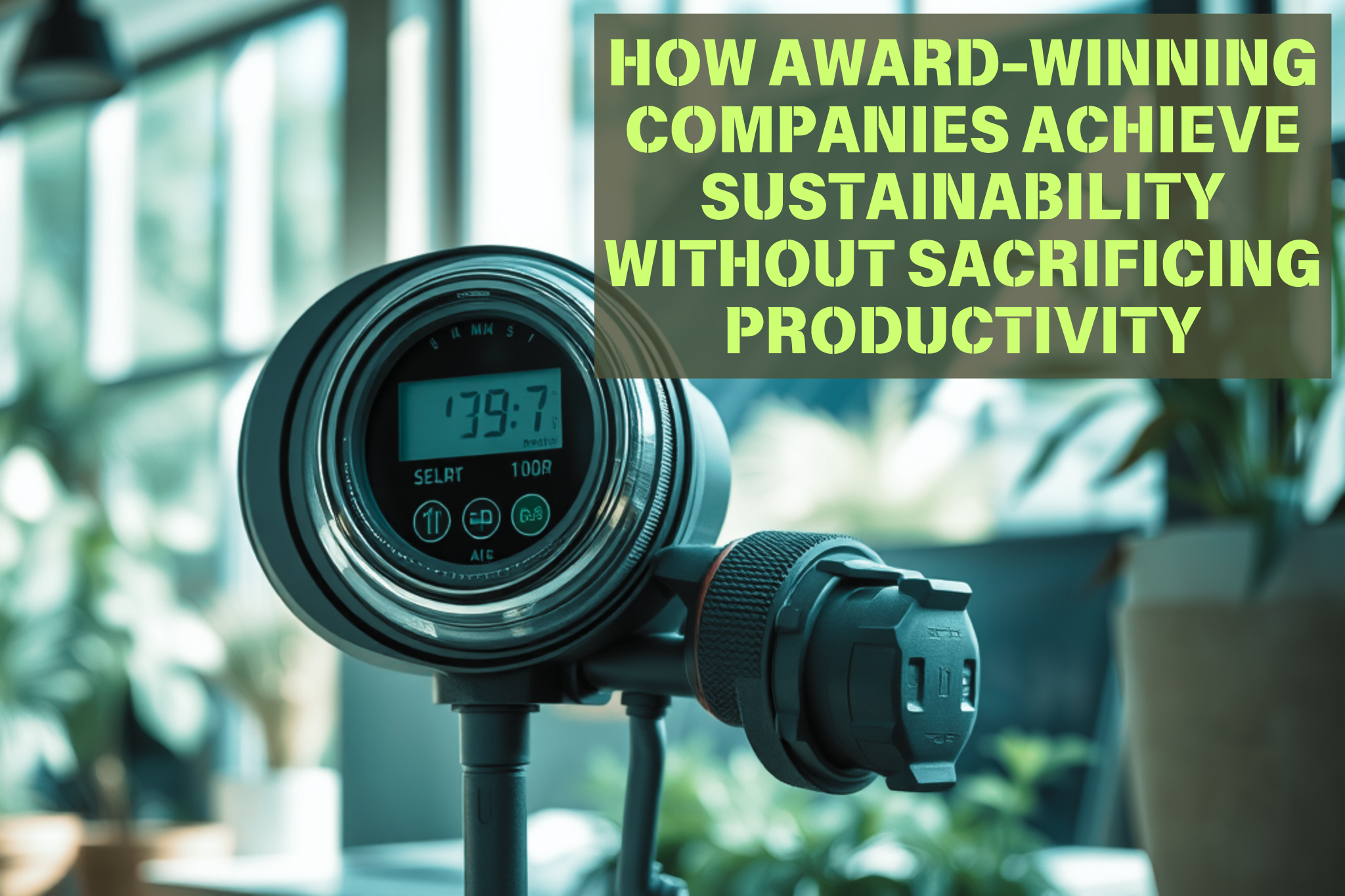
AI-powered energy management system dashboard showing real-time resource improvement and cost savings at a sustainable manufacturing facility.
I remember working with a manufacturing client who was initially skeptical about investing in smart resource management. They implemented an AI-powered system to track their energy usage. They cut their electricity bills by 32% in just six months! The key was starting small. We began with their most energy intensive processes. Then, we gradually expanded it throughout their facilities.
One thing that really made a difference was installing smart meters throughout their facility. These little devices provided real-time data about energy consumption patterns, helping us find peak usage times and opportunities for improvement. We discovered that some machines were running at full power during low-production periods. It was basically like throwing money out the window!
Smart meters and IoT sensors monitoring energy consumption patterns in an eco-friendly industrial setting.
The ROI on these systems has been incredible. Not only did they reduce their carbon footprint, but the cost savings allowed them to invest in more sustainable initiatives. It’s what I like to call the “green snowball effect” – one successful sustainability project often funds the next one.
Circular Economy Adoption
Electronics recycling program in action: Employee sorting valuable components for sustainable reuse.
Design products for easy recycling and reuse
Implement take-back programs for end-of-life products
Create partnerships with recycling facilities
Develop refurbishment programs for used products
Transform waste streams into valuable resources
Let me share something that totally changed my perspective on waste management. While working with a consumer electronics company, we made an astonishing discovery. Their “waste” materials contained precious metals. These metals were worth millions of dollars annually! This realization led to the development of a sophisticated recycling program. It not only reduced their environmental impact but also created a new revenue stream.
The company started offering customers a discount on new purchases when they returned their old devices. This simple initiative had amazing results. Customer loyalty increased. Disposal costs decreased. They secured a reliable source of recyclable materials. Talk about a win-win situation!
Supply Chain Improvement
Partner with local suppliers to reduce transportation emissions
Use electric vehicles for logistics operations
Implement blockchain for supply chain transparency
Enhance delivery routes using AI algorithms
Choose suppliers based on sustainability metrics
Here’s something most people don’t realize about supply chain sustainability it’s not just about reducing emissions. We helped a food distribution company improve their supply chain. They improved their delivery times by 28%. They also cut their carbon footprint! The secret was using AI to analyze thousands of possible delivery routes and weather patterns.
Electric delivery vehicles and sustainable logistics operations reducing transportation emissions.
One challenge we faced was convincing smaller suppliers to adopt sustainable practices. We found that offering long-term contracts and technical support made a huge difference. Sometimes you have to invest in your partners to achieve your sustainability goals!
Employee Engagement Programs
Green team meeting: Employees collaborating on sustainable workplace initiatives.
I’ve learned that the most successful sustainability programs always start with engaged employees. During one project, we set up a simple suggestion box for sustainability ideas. An entry-level employee invented a solution. This innovation saved the company $50,000 annually in energy costs. It was a perfect example of how good ideas can come from anywhere!
Real-World Success Stories
Let me share some inspiring examples I’ve studied closely throughout my sustainability consulting career. These companies aren’t just talking about sustainability they’re revolutionizing their industries with it!
1.Patagonia’s Circular Fashion Revolution
I’ve always been impressed by Patagonia’s commitment to walking the talk. Their “Worn Wear” program is genius. Instead of just selling new clothes, they’ve created an entire ecosystem around repairing and reusing existing products. During a visit to one of their repair centers, I was amazed. This approach not only reduced waste. It also created a new revenue stream through their repair services. They’ve proven that sustainability can be a profitable business model!
Patagonia’s Worn Wear program: Skilled technicians repairing outdoor gear for extended product life.
2.Unilever’s Resource Efficiency Transformation
Unilever’s Sustainable Living Plan didn’t just help the environment. It revolutionized their entire supply chain. By committing to source 100% of their agricultural raw materials sustainably, they’ve actually strengthened their supply chain resilience. When I analyzed their approach, I discovered that their sustainable practices significantly reduced costs in energy and raw materials. These practices also boosted productivity.
Unilever’s sustainable agriculture: Farmers implementing eco-friendly farming practices in partnership with the company.
3.Google’s Smart Energy Innovation
You know what really excites me about Google’s approach? They’re using their own technology to solve environmental challenges! Their use of machine learning to improve data center cooling systems is brilliant. I remember a conversation with a data center manager. They told me that AI improvement led to a 40% reduction in cooling energy. Talk about using your strengths for sustainability!
Google’s AI-optimized data center showing advanced cooling systems and energy efficiency measures.
4.IKEA’s Circular Economy Leadership
IKEA’s buy-back program is a perfect example of what I call “profitable sustainability.” By 2030, they’re aiming to use only renewable and recycled materials in their products. But here’s the clever part their buy-back program isn’t just good for the environment. It’s also creating a whole new market for refurbished furniture. During a workshop with their sustainability team, I learned how this approach has significantly reduced their raw material costs. It has also opened up a new customer segment.
IKEA’s furniture buy-back program in action: Staff assessing used furniture for recycling and resale.
5.Microsoft’s Ambitious Environmental Goals
Let me share something fascinating about Microsoft’s approach. They’re not just trying to reduce their environmental impact. They’re actually working to reverse it! Their commitment to becoming carbon negative by 2030 sounds ambitious, but they’re backing it up with concrete actions. They’re using AI to improve resource use, which has led to impressive efficiency gains. One of their data centers I studied achieved a 25% reduction in water usage through these innovations.
Microsoft’s carbon negative initiative: Reforestation projects and renewable energy installations.
6.Tesla’s Manufacturing Revolution
Tesla’s gigafactories represent what I believe is the future of sustainable manufacturing. During a case study of their operations, I was struck by how they’ve integrated sustainability into every aspect of production. Their focus on energy efficient production has reduced their environmental impact. It has also increased their production efficiency and reduced costs.
Tesla Gigafactory’s sustainable manufacturing process featuring automated production lines and solar power integration.
7.Natura & Co’s Sustainable Supply Chain
One of my favorite examples of sustainable sourcing comes from Natura & Co. They’ve proven that working with local communities and sustainably managed rainforests benefits the environment. It also creates a more resilient and efficient supply chain. When I analyzed their model, I discovered their local sourcing approach reduced transportation costs significantly. It also ensured a stable supply of raw materials.
Natura & Co’s sustainable sourcing: Local communities harvesting natural ingredients using traditional techniques.
Conclusion
The journey to sustainability doesn’t have to come at the expense of productivity. In fact, these award-winning companies have shown it often enhances productivity! The key is to approach sustainability strategically, focusing on initiatives that create both environmental and economic benefits.
Remember, you don’t have to implement everything at once. Start with the strategies that make the most sense for your organization, measure the results, and build on your successes. The most successful companies I’ve worked with all started with small steps that grew into company-wide transformations.
Whether you’re just starting your sustainability journey or you want to enhance your existing initiatives, these proven strategies can help. They can assist you in achieving both your environmental and productivity goals. Why not start by implementing one of these approaches in your organization today?
FAQs
What are the most effective sustainability strategies award‑winning companies use to boost productivity?
Award-winning companies implement sustainability strategies such as energy-efficient operations, circular economy practices, and sustainable supply chain management. These strategies not only reduce environmental impact but also enhance employee engagement and operational efficiency, resulting in higher productivity. Integrating technology to monitor sustainability metrics allows businesses to continuously optimize processes without sacrificing output.
How does sustainability drive cost savings and competitive advantage in top-performing organizations?
Sustainability drives cost savings through reduced energy consumption, waste minimization, and resource optimization. Top-performing organizations gain a competitive advantage by demonstrating eco-consciousness to consumers and investors, improving brand reputation, and accessing green financing opportunities. By aligning sustainability with business goals, companies achieve financial benefits while maintaining or even improving productivity levels.
What sustainability initiatives do leading companies invest in without sacrificing operational efficiency?
Leading companies invest in initiatives like renewable energy adoption, water conservation, sustainable packaging, and employee sustainability training. These initiatives are designed to integrate seamlessly into existing operations, ensuring efficiency is maintained. By adopting data-driven decision-making and automation, businesses can achieve measurable sustainability outcomes while keeping processes streamlined.
Why is sustainability reporting essential for award-winning companies and how does it improve performance?
Sustainability reporting is essential because it provides transparency, tracks progress, and identifies opportunities for improvement. Award-winning companies use reporting frameworks like GRI or SASB to monitor environmental, social, and governance (ESG) metrics. This improves performance by highlighting inefficiencies, encouraging accountability, and informing strategic decisions that align sustainability with productivity goals.
How do sustainability frameworks help businesses increase productivity while reducing environmental impact?
Sustainability frameworks guide businesses in integrating eco-friendly practices into core operations. By setting clear goals, tracking performance metrics, and adopting circular and green supply chain models, companies reduce environmental impact without compromising output. Frameworks also foster innovation and operational improvements, enabling teams to work smarter, not harder, while achieving sustainability objectives.
References
Ghardallou, W. (2022) Corporate sustainability and firm performance: The moderating role of CEO education and tenure, Sustainability, 14(6). Available at: https://www.mdpi.com/2071-1050/14/6/3513 (Accessed: 6 Nov. 2024).
Osorio, I. M. V. (2024) Exploring the link between sustainable practices and corporate performance across industries, Business Systems Research Journal, 15(1). Available at: https://ojs.srce.hr/index.php/bsr/article/view/30512 (Accessed: 6 Nov. 2024).
Rizky, S. and Winarso, E. (2025) The influence of green accounting on company value (case study of companies winning Asia Sustainability Reporting Awards 2023), Journal of Finance and Accounting, 13(1), pp. 44–63. Available at: https://www.sciencepublishinggroup.com/article/10.11648/j.jfa.20251301.14 (Accessed: 6 Nov. 2024).
Al Azizah, U. S. and Haron, R. (2025) The sustainability imperative: Evaluating the effect of ESG on corporate financial performance before and after the pandemic, Discover Sustainability, 6, article 529. Available at: https://doi.org/10.1007/s43621-025-01401-8 (Accessed: 6 Nov. 2024).