Discover the top ecotourism trends, facts, and stats. Learn actionable insights for travelers and businesses to benefit from the eco-friendly travel boom.
Ecotourism 2026: The Sustainable Shift · art of eco
art of eco
📊 Market Insights 2026
🌿 Ecotourism: The Sustainable Shift
Global ecotourism market projected to reach $324 billion by 2026,
driven by conscious travel, conservation priorities, and digital transformation.
📈
14.3% CAGR
🌍
Global Movement
💚
Conservation Focus
💰
2026 Market Value
$324B
Projected global valuation
📈
Growth Rate (CAGR)
14.3%
Highest in tourism sector
🏕️
Land Tours Share
71%
Dominant revenue segment
📱
Direct Bookings
61%
Digital platform growth
Opportunity Sectors
🌊
For Travelers
Engage with high-growth conservation experiences and ethical travel platforms
that prioritize environmental and cultural preservation.
Marine ecotourism: 14.93% CAGR
Asia-Pacific adventure travel
Ethical booking platforms
Wildlife conservation experiences
🏛️
For Countries
Attract foreign investment through green financing, tax incentives,
and infrastructure development in biodiversity-rich regions.
Wildlife corridor development
Low-emission tourism hubs
Carbon credit programs
Sustainable infrastructure grants
🚀
For Businesses
Scale regenerative ventures through AI-powered itineraries, blockchain transparency,
and partnerships with local communities.
Indigenous marketplace platforms
Tokenized conservation projects
Sustainability analytics tools
Eco-certification services
Market Analytics
Global Valuation Forecast
USD Billions
Regional Growth
Booking Methods
Market Dynamics
Startup Growth
14.31%
CAGR through 2034
Revenue Leader
71%
Land-based tours
2026 Strategy
Scale through digital platforms and strategic local partnerships to capture emerging market share.
Key Milestones
🌍
Angola Tourism Summit 2026
Public-private forum for sustainable tourism investment.
🏞️
US Great Outdoors Act
$3B investment in national park infrastructure.
🌱
EU Green Tourism Certification
Pan-European sustainable standards program.
FAQs
What is ecotourism and why is it becoming popular?
Ecotourism is a form of sustainable travel that focuses on exploring natural environments responsibly while supporting conservation and local communities. Its popularity is growing as travelers seek eco-friendly destinations, immersive nature experiences, and low-impact tourism options.
Which countries are the top ecotourism destinations?
Leading ecotourism destinations include Costa Rica, New Zealand, Iceland, and Rwanda, known for biodiversity, conservation initiatives, and eco-lodges. Travelers prioritize these countries for their sustainable practices, unique wildlife, and opportunities for immersive nature experiences.
How can businesses benefit from the growing ecotourism market?
Companies in travel, hospitality, and adventure sectors can leverage ecotourism trends by offering sustainable tours, eco-lodges, and responsible travel packages. The global ecotourism market is projected to reach over $269 billion by 2026, presenting lucrative opportunities for green-focused entrepreneurs.
What are the key benefits of ecotourism for travelers?
Ecotourism offers benefits such as connecting with nature, reducing environmental impact, and supporting local communities. Travelers gain meaningful experiences, learn about conservation, and enjoy unique destinations while making environmentally conscious choices.
How can travelers plan an ecotourism trip effectively?
Planning an ecotourism trip involves choosing certified eco-friendly accommodations, booking responsible tours, minimizing carbon footprint, and respecting local cultures. Tools like eco-certification guides, sustainable travel apps, and research on conservation projects can help make every trip impactful and responsible.
Murchison Falls stands as one of Africa’s most powerful natural wonders, where the entire Nile River compresses through a 7-meter gap before plunging 43 meters into the gorge below. This creates an awe-inspiring spectacle that humbles every visitor who witnesses it.
What sets Murchison Falls apart from other safari destinations is its dual wildlife viewing experience. You can observe elephants, giraffes, lions, and buffalo during land-based game drives, then transition to the water for a completely different perspective. Hippos, crocodiles, and diverse birdlife populate the riverbanks, offering encounters you simply cannot experience elsewhere.
@fromabovestudios Murchison Falls, the most powerful waterfall in the world. Every second, the equivalent of 200 bathtubs full of water is forced through a gorge less than seven paces wide. The pressure is so great that the ground trembles around it. The water then plummets 43 meters before flowing out toward Lake Albert as a placid river whose banks are dense with hippos, crocodiles, waterbuck @Explore Uganda and buffaloes. #explorebunyoro#murchisonfalls#explore#explorepage#uganda#rivernile#falls#river♬ original sound – fromabovestudios
The park also provides something increasingly rare in our modern world: profound serenity. The natural soundscape of cascading water, bird calls, and rustling savanna creates an environment perfect for meditation and reflection. This makes Murchison Falls particularly meaningful for visitors seeking deeper connection with nature, including those who are visually impaired and can fully experience the falls through sound and sensation.
Essential Activities at Murchison Falls
Game Drives: Safari Through Diverse Terrain
Morning and afternoon game drives take you through rolling savanna, acacia woodland, and riverine forest. The northern bank of the Nile offers the highest concentration of wildlife, where you might encounter:
Lions resting in the shade
Herds of elephants moving to water sources
Rothschild’s giraffes browsing acacia trees
Buffalo congregating in massive herds
Leopards (if you’re fortunate)
Early morning drives yield the best predator sightings when animals are most active.
Boat Ride to the Falls: The Essential Experience
The three-hour boat safari from Paraa to the base of Murchison Falls ranks among Africa’s finest wildlife experiences. As you cruise upstream, the Nile reveals its secrets gradually. Crocodiles sun themselves on mudbanks. Hippo pods surface and submerge. Elephants come to drink at the water’s edge.
The boat brings you to the base of the falls, where the Nile’s full power becomes visceral. The roar is deafening. Mist rises continuously. Rainbow light plays through the spray. This perspective from below makes you understand why early explorers were so transfixed by this place.
Visitor Comparison Table
“While Murchison Falls continues to attract international travelers seeking a once-in-a-lifetime Nile experience, more than half of Uganda’s national park visitors are now domestic. This dual audience helps explain why every journey through the park feels different shaped by both local rhythms and global curiosity.”
Visitor Type
Share of Visitors
Year
What It Indicates
Domestic Visitors
56.1%
2024
Strong local engagement with national parks, driven by affordability, education, and domestic tourism campaigns
Foreign Non-Residents
Significant share (≈40%)*
2023
Sustained international interest in Uganda’s wildlife and landscapes, especially iconic destinations like Murchison Falls
After the boat ride, most visitors hike to the top of the falls for the opposite perspective. Here you witness the exact point where Africa’s longest river squeezes through a narrow gorge. The force is mesmerizing—millions of liters per second forced through a space narrow enough to almost span with a rope.
The Hidden Secret: Uhuru Falls
Most guides don’t mention Uhuru Falls, which only appears when the Nile runs strong. This secondary cascade represents nature’s conditional landscape—sometimes visible, sometimes not. It teaches an important lesson about natural systems: they’re dynamic, not static.
— Uganda Wildlife Authority (@ugwildlife) June 26, 2023
Visit both viewpoints to understand the full story:
Top of the Falls: Compression, pressure, constraint
Uhuru Falls: Release, freedom, abundance
These contrasts mirror life itself—the interplay between limitation and possibility.
Canopy Walks: Elevated Forest Perspectives
The canopy walkway suspends you above the forest floor, offering a bird’s-eye view of Rabongo Forest. This activity brings you into the vertical dimension of the ecosystem, where you observe primates, birds, and insects that rarely descend to ground level.
Top of Falls Breakfast: Sunrise with Power
Imagine starting your day with fresh coffee and breakfast while the Nile thunders beside you. This exclusive experience combines culinary pleasure with natural spectacle, creating memories that last far longer than photographs.
BBQ Nights: Community Under African Stars
Evening barbecues bring travelers together under impossibly clear skies. The savanna night comes alive with sounds—distant lion roars, hippo grunts, nightjar calls. Fire, food, and fellowship complete the safari experience.
When to Visit Murchison Falls
Dry Season (December-February & June-September): Peak Wildlife Viewing
During dry months, animals concentrate around permanent water sources, making wildlife sightings predictable and frequent. The vegetation thins out, improving visibility. Roads remain accessible with standard safari vehicles.
Advantages:
Highest wildlife concentrations
Best photography conditions
Easiest access throughout the park
Pleasant temperatures
Considerations:
Higher visitor numbers
Premium pricing
Advanced booking recommended
Wet Season (March-May): The Birder’s Paradise
When the rains arrive, Murchison transforms. Migratory birds return from Europe and North Africa, swelling the park’s bird list to over 450 species. The landscape turns lush green. Waterfalls swell with additional volume.
Advantages:
Extraordinary birdwatching
Lower accommodation prices
Fewer tourists
Dramatic skies for photography
Fuller, more powerful waterfalls
Considerations:
Requires 4×4 vehicle for many roads
Some tracks become impassable
Animals more dispersed
Occasional activity cancellations
Budget Tip: Wet season often brings discounts of 20-40% on lodges and camps. If you have flexibility and don’t mind occasional rain, this represents exceptional value.
Practical Essentials
Vehicle Requirements
Dry season: Most standard safari vehicles manage well.
Wet season: 4×4 becomes essential for navigating muddy tracks and river crossings. Don’t attempt wet season visits without proper vehicle clearance.
What to Pack
Binoculars for wildlife and bird identification
Sun protection (hat, sunscreen, sunglasses)
Light layers for early morning drives
Rain jacket regardless of season
Insect repellent
Camera with zoom lens
Neutral-colored clothing (avoid bright colors)
Authentic Souvenirs Worth Taking Home
Skip the mass-produced trinkets. Instead, seek out meaningful items that connect to the region:
Naturally Grown Coffee and Tea
Uganda produces exceptional Arabica coffee and tea. Purchase directly from local cooperatives near the park to support small-scale farmers. The coffee you drink at home will remind you of misty mornings watching elephants.
Local Art
Seek out paintings, carvings, and crafts created by artists from communities surrounding the park. These pieces tell stories and preserve cultural traditions. Each purchase directly supports creative livelihoods.
Recitation, Paul Ndema, 2017. Image from the artist.
Nearby Attractions That Complete the Experience
Ziwa Rhino Sanctuary (En Route)
Located between Kampala and Murchison Falls, Ziwa offers walking safaris to track white rhinos—the only wild rhinos in Uganda. This adds the fifth member of the Big Five to your trip.
Budongo Forest Reserve (Adjacent)
Home to over 800 chimpanzees, Budongo provides exceptional primate tracking. The contrast between savanna and forest ecosystems enriches your understanding of Uganda’s biodiversity.
Baker’s Fort (Historical Context)
Ruins of Samuel Baker’s fort add historical dimension to your visit. Baker was among the first Europeans to reach and name Murchison Falls in the 1860s.
Why Murchison Falls Demands Your Attention
In an era when every wilderness feels documented and discovered, Murchison Falls retains its power to astonish. The falls themselves teach us about nature’s compression and release how immense force concentrated through a small space creates transformation.
The dual land-and-water safari approach means you never experience just one dimension of the ecosystem. You see how terrestrial and aquatic realms connect, how the Nile shapes everything around it.
Most importantly, Murchison offers what we increasingly lack: silence, solitude, and the humbling recognition that humans are small parts of something vastly larger and older than ourselves.
Come during the dry season if you want guarantees. Come during the wet season if you want discounts and authenticity. But come because places like this, where nature still dominates utterly, grow rarer every year.
FAQs
How much does a safari to Murchison Falls cost?
Safari costs to Murchison Falls vary significantly based on accommodation level, group size, and trip duration. Here’s a comprehensive breakdown:
Murchison Falls Safari Pricing Table
Package Type
Duration
Price Per Person (USD)
What’s Included
Budget Safari
3 Days/2 Nights
$450 – $650
Basic lodge, shared transport, park fees, game drive, boat safari
Mid-Range Safari
3 Days/2 Nights
$800 – $1,200
Comfortable lodge, private 4×4, meals, guide, all activities
Luxury Safari
3 Days/2 Nights
$1,800 – $3,500
Premium lodge/tented camp, private guide, gourmet meals, drinks, all activities
Budget Safari
4 Days/3 Nights
$650 – $900
Basic accommodation, shared vehicle, standard activities
Transport, park entry, boat ride (very long day – 10-12 hours driving)
Additional Costs to Budget:
Park entrance fees: $40 per person per day (foreign non-residents)
Boat safari to falls: $30 per person
Game drive vehicle hire: $30-40 (if not included)
Chimpanzee tracking (Budongo): $90 per person
Rhino tracking (Ziwa): $50 per person
Tips for guides and lodge staff: $10-20 per day recommended
Money-Saving Tips:
Combine with other parks for multi-destination packages
Travel during wet season (March-May) for 20-40% discounts
Join group tours to share transport costs
Book directly with local operators rather than international agencies
Is Murchison Falls worth visiting?
Absolutely. Murchison Falls National Park ranks among Africa’s premier safari destinations for several compelling reasons:
Unique wildlife diversity: Unlike parks where you see only land animals or only marine life, Murchison offers both. The boat safari provides encounters with hippos, crocodiles, and waterbirds, while game drives deliver classic African safari animals—lions, elephants, giraffes, and buffalo.
The falls themselves: Witnessing the entire Nile River compress through a 7-meter gap creates an unforgettable spectacle. The raw power and thunderous sound humble every visitor.
Value for money: Compared to East African alternatives like Serengeti or Masai Mara, Murchison offers similar wildlife experiences at significantly lower prices, especially during the wet season.
Accessibility: Located just 5-6 hours from Kampala, Murchison is more accessible than many remote African parks, making it ideal for travelers with limited time.
Bird paradise: With over 450 bird species, it’s one of the world’s top birding destinations, particularly during the wet season when migrants arrive.
Is Murchison Falls safari safe?
Yes, Murchison Falls is very safe for tourists when you follow standard safari protocols:
Wildlife safety:
Always remain in your vehicle during game drives unless your guide says it’s safe
Never approach animals on foot
Follow your guide’s instructions immediately and without question
Keep noise levels low to avoid startling animals
Maintain safe distance from hippos (they’re more dangerous than they look)
Health considerations:
Roads to the park are generally good but can be rough in wet season
Murchison Falls is in a malaria zone—take prophylaxis
Drink only bottled or purified water
Uganda is politically stable with low crime rates against tourists
How many days do you need at Murchison Falls National Park?
Minimum: 2 days/1 night – Allows for one game drive, boat safari to the falls, and top of falls hike. This rushed itinerary covers highlights but feels hurried.
Recommended: 3 days/2 nights – Provides time for multiple game drives (different times of day reveal different animals), boat safari, top of falls visit, and relaxation at your lodge. This duration offers the best balance of experience and value.
Ideal: 4 days/3 nights – Allows you to add chimpanzee tracking in Budongo Forest, explore different sectors of the park, enjoy sunrise and sunset game drives, and truly absorb the environment without rushing.
Extended: 5+ days – Perfect for serious wildlife photographers, birders, or those seeking a meditative retreat in nature. Adds time for canopy walks, nature walks, sport fishing, and community visits.
Most visitors find 3 days provides excellent value without feeling rushed or overly indulgent.
What is the best safari company for Murchison Falls?
When selecting a safari operator for Murchison Falls, prioritize these factors:
Essential criteria:
Uganda Tourism Board (UTB) registration and licensing
Experienced guides with wildlife knowledge
Well-maintained 4×4 vehicles with pop-up roofs
Transparent pricing with no hidden fees
Positive recent reviews on TripAdvisor and SafariBookings
Responsive communication
Recommended operator types:
Budget-conscious travelers: Look for local Ugandan operators based in Kampala or Masindi. They offer authentic experiences at lower prices than international chains. Ask about group joining options to reduce costs.
Mid-range seekers: Choose established operators with 5+ years experience, bilingual guides, and partnerships with quality lodges. These companies balance price with comfort and reliability.
Luxury travelers: Select operators offering private guiding, customized itineraries, premium lodges, and additional services like bush dinners and photographic guidance.
Research tips:
Check cancellation policies
Request detailed itineraries with specific lodge names
Verify what’s included (meals, park fees, activities)
Ask about vehicle age and condition
Confirm group sizes (smaller is better)
What should I pack for Murchison Falls safari?
Essential items:
Clothing:
Neutral colors (khaki, brown, olive green) for game drives
Long sleeves and pants for sun and insect protection
Light jacket for early morning drives (can be cold)
Wide-brimmed hat
Comfortable closed-toe shoes (boots or sneakers)
Swimsuit (some lodges have pools)
Technical gear:
Binoculars (8×42 or 10×42 recommended for wildlife viewing)
Camera with zoom lens (minimum 200mm, ideally 400mm+)
Extra memory cards and batteries
Power bank for charging devices
Headlamp or flashlight
Health and comfort:
High SPF sunscreen (African sun is intense)
Insect repellent with DEET
Antimalarial medication (consult your doctor)
Basic first aid kit
Personal medications
Hand sanitizer and wet wipes
Documents:
Passport with Uganda visa
Yellow fever vaccination certificate (required for entry)
Travel insurance documents
Printed safari itinerary and lodge confirmations
Don’t forget:
Cash (US dollars) for tips and souvenirs
Reusable water bottle
Ziploc bags for protecting electronics from dust
Small daypack for game drives
Can you do a day trip to Murchison Falls from Kampala?
Technically yes, but it’s not recommended for most travelers. Here’s the reality:
The logistics:
Kampala to Murchison Falls: 5-6 hours (305 km)
Round trip: 10-12 hours of driving
Time in park: 3-4 hours maximum
What you can realistically do:
Brief boat safari to the falls
Quick drive to top of falls viewpoint
Very limited wildlife viewing
Why it’s problematic:
Exhausting long drive leaves you too tired to enjoy the park
Wildlife is most active dawn and dusk—you’ll miss both
You’ll spend more time in the vehicle than experiencing nature
Much higher per-experience cost than multi-day trips
Better alternatives:
Minimum 2-day/1-night trip (allows evening and morning game drives)
Fly to park airstrip if time-constrained (45-minute charter flight)
Combine with Ziwa Rhino Sanctuary en route to break journey
If you only have one day, consider closer destinations like Lake Mburo National Park (4 hours) or day trips to Ngamba Island Chimpanzee Sanctuary.
This article takes a look at traditional the African Vernacular experience, it can inspire modern design in new and interesting ways. Imagine stepping into a building that feels like more than just walls and a roof. What if a space tells the story of the people who live there their daily lives, customs, and history?
The future of architecture is culture. Philip Johnson.
In architecture, capturing the spirit of a place goes beyond looks or materials. It’s about creating spaces that feel alive with the stories of time, place, and circumstance.
Architects can use design inspired by the unique experiences. They can also draw inspiration from social interactions and local customs. This method allows them to create spaces deeply connected to the people who use them. This article shows how these traditional experiences guide designers. They help in making intentional choices. These choices allow modern spaces to show the true essence of a community.
Vernacular African Experience
The Vernacular African Experience is deeply rooted in the ways communities live. It is also rooted in how they interact and connect with each other. This experience reflects a lifestyle where community bonds and traditions shape daily life, creating a sense of unity and purpose. It includes storytelling, communal gatherings, and rituals that bring people together, highlighting values like respect, cooperation, and social harmony. These practices are not only social. They are also ways for people to pass down wisdom. They celebrate life events and reinforce a shared identity.
This experience also shows a strong connection to the land and nature. In many African cultures, natural elements are not just resources but are seen as living parts of the world. The environment influences daily routines, with communities adapting their lifestyles to work with the seasons, climate, and natural surroundings. Respect for nature and balance between people and the environment is vital to the Vernacular African Experience. It emphasizes a way of life that values human relationships and harmony with the earth.
Social Interactions
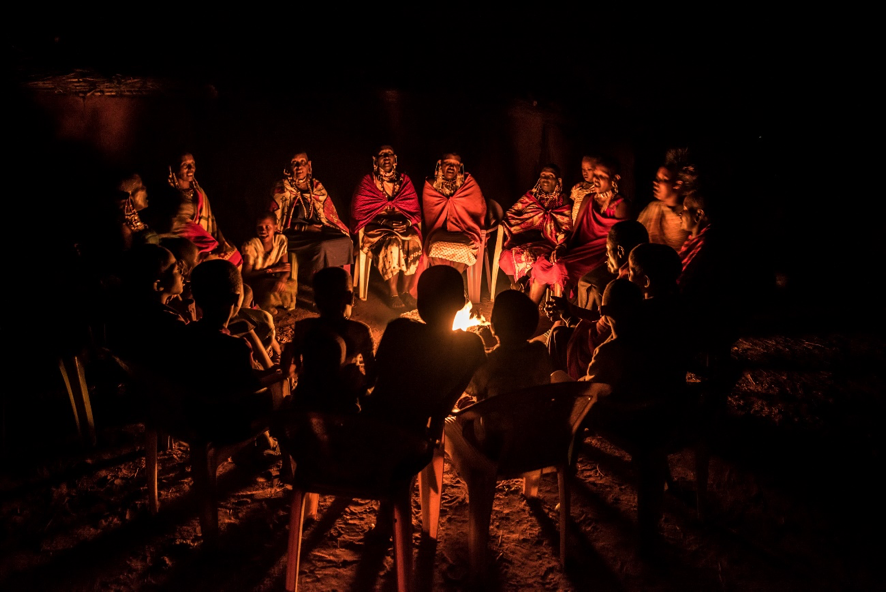
As humans, we are naturally social and have always found ways to interact, share stories, and pass on wisdom. Storytelling around a fire, for example, is a concept as old as time. This idea can inspire the design of spaces. For instance, a space inspired by “storytelling around a fire” can be created as a learning space.
The tradition of oral learning created an intense, immersive experience. People would gather around a fire at night. They focused on the stories without distractions. Even when brought indoors, the fireplace acted as a gathering point, making people feel close and focused.
The fireplace experience.www.trailblazertravelz.com
Today, we see this concept in spaces like auditoriums, classrooms, and theaters. These places are often designed to center around a focal point. This point is a speaker or presenter, acting like the “fireplace.” Such spaces are intended to encourage focus, just as traditional spaces did.
A modern day auditorium with parallels to the fireplace setting.istockphoto.comI can’t confirm that these ideas were implemented, but there are certainly some parallels. Here is the grand conference hall of the African Union Conference Center.
A Collaborative Discussion Space
In all societies, there are leaders who guide and make decisions for the group. Throughout history, leaders often gathered around a fire for discussions. The seating around the fire reflected a clear sense of hierarchy. The fire acted as a gathering point, even if the meetings took place in semi-outdoor or indoor spaces.This is can serve as an inspiration for creating a modern meeting space based on a traditional African experience.
A space inspired by the idea of people discussing around a fireplace.project by Hung Nguyen, Tu Dang, Hieu Ha, Duy Nguyen.kairalooro.com.
Modern Applications
In the case of renowned architect, Francis Kéré, he tried to emulate an experience. He took inspiration from the great tree in his hometown of Gando. Under this tree, members of the community meet to reflect on the day. Kéré’s design is based on creating this sense of community while connecting people with nature.
Serpentine Pavilion at night. Photo by Iwan Baan.
A big, see-through roof made of steel covers all of Kéré’s Serpentine Pavilion. It makes it feel like you’re standing under a tree. It lets sunlight in but keeps out the rain. Wooden shades under the roof create shifting shadows. They resemble light through tree branches. The shadows change as the sun and clouds move across the sky.
Recreating the Experience of Being Under A Tree.archidatum.com.
This traditional setup can inspire today’s political meeting rooms or council chambers. The arrangement of seats around a central point brings a sense of order. It allows for focused discussions in a structured environment.
A market organized around an ancestral tree.
In rural Niger, markets are held weekly, so individual villages rarely develop a thriving local economy. As Dandaji’s population has grown, the town has taken steps to change this by establishing a permanent daily market. The existing market is centered around an ancient tree. This tree is a meaningful gathering place on Market Day.
Ancestral tree centered in the Dandaji marketplace.atelier masomi,archdaily.com.
So, the new project stays on this site. It enhances a familiar experience the community values. The goal was to create an eye-catching structure. It would inspire pride among locals. It also aims to attract more business to the area. Beyond just improving the market, the project aims to build a space that boosts community confidence. It opens new hopes for the future. This is achieved by offering a remarkable upgrade to this public space.
Amplifying the effect the tree,tree inspired shades erected to give shade but also catch the eye’s attention.atelier masomi,archdaily.com.
Architecture should speak of its time and place, but yearn for timelessness.” Frank Gehry
Conclusion:
In conclusion, capturing the essence of traditional architecture goes beyond merely replicating older designs. It’s about integrating the experiences of the people who have inhabited those spaces. It also involves their values and ways of life. We can draw inspiration from practices like storytelling around a fire. Communal discussions and spatial hierarchies can also inspire us. With these inspirations, we can create modern environments that resonate with these timeless traditions.
This approach not only preserves cultural values but also fosters functional and inspiring spaces for today’s world. As we continue this journey, let’s engage in a dialogue about how we can further blend cultural heritage with contemporary design. Your thoughts and insights are essential to shaping a future where architecture truly reflects the rich tapestry of our communities.
FAQs
What is the African Vernacular Experience and why is it important in modern architecture?
The African Vernacular Experience refers to the study and application of traditional African architectural practices, materials, and spatial organization. It is important in modern architecture because it emphasizes climate-responsive designs, sustainable materials, and culturally meaningful spaces. By learning from these traditional methods, architects can create modern buildings that are functional, eco-friendly, and deeply connected to local communities.
How does the African Vernacular Experience influence intentional space design in contemporary buildings?
The African Vernacular Experience inspires intentional space design by integrating cultural values, natural materials, and spatial hierarchies found in traditional African dwellings. Contemporary architects use these principles to design spaces that prioritize human comfort, social interaction, and environmental sustainability. This approach ensures that buildings not only serve practical needs but also convey meaning and identity.
What traditional principles define the African Vernacular Experience in sustainable design?
Key principles of the African Vernacular Experience include passive cooling, natural ventilation, use of locally sourced materials, and respect for the surrounding landscape. These methods promote sustainability by reducing energy consumption, minimizing environmental impact, and extending the lifespan of buildings. Applying these principles today helps architects achieve eco-conscious designs that align with modern sustainability standards.
Can the African Vernacular Experience provide solutions for climate-responsive architecture today?
Yes. The African Vernacular Experience offers practical solutions for climate-responsive architecture through techniques such as orientation for optimal sun exposure, thick earthen walls for insulation, and shaded courtyards for natural cooling. Modern architects can adapt these strategies to contemporary structures, reducing reliance on artificial heating and cooling while creating comfortable, energy-efficient spaces.
How are communities preserving the African Vernacular Experience in modern urban development?
Communities preserve the African Vernacular Experience by documenting traditional building techniques, restoring historic structures, and integrating vernacular principles into new developments. Cultural festivals, workshops, and educational programs also raise awareness of these practices. By combining tradition with modern design, communities maintain cultural identity while promoting sustainability in rapidly urbanizing areas.
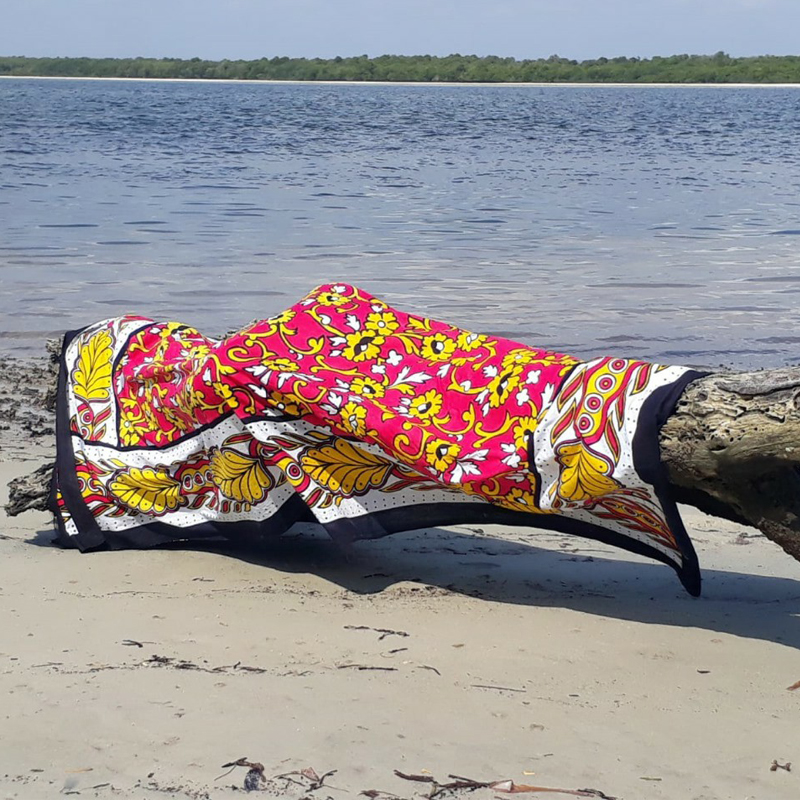
Imagine a cloth that tells stories, celebrates life events, and speaks for those who wear it. The kanga is a vibrant, machine-printed fabric. It has become a cherished cultural symbol among the Swahili people of East Africa since the 1880s. Each kanga measures about 45 x 65 inches. They are typically sold in pairs. A unique border, a central motif, and a line of text along its edge define each kanga. These elements blend beauty with deep meaning. Despite its presence across continents, from Japan to Mozambique, the kanga’s cultural richness and symbolic designs remain underexplored. Most research focuses only on its East African origins. Yet, its widespread production, trade, and use highlight its global impact and lasting significance.
An Original Kanga.KenyaKangaCollection.com
This article aims to uncover the kanga’s intricate cultural meanings. It will explore how its powerful symbolism and artistry can inspire architecture and design. By examining the kanga’s heritage, we will explore its potential for creating culturally responsive spaces. We will see how this remarkable cloth can be thoughtfully integrated into modern design practices. It bridges traditional stories with contemporary spaces.
Early Designs
The origins of kanga designs in East Africa reflect a blend of cultural influences. Resembling Far Eastern textiles, with border patterns and the cashew nut motif, kanga designs share roots with Persian rugs and Kashmiri fabrics. Another theory credits Portuguese traders, noting that Swahili women sewed together small Portuguese cloth squares (lenco) to create the original leso. Further, Indian Ocean trade influenced early kanga designs, with local women initially hand-printing dots and later using block prints on merikani cloth.
Eventually, kanga production expanded to textile mills in Europe and Asia, making kanga an East African staple.
Symbolism and Social Contexts
Kanga designs hold deep cultural meanings and serve symbolic roles in various life stages and social settings. At birth, kangas wrap and protect babies, bestowing strength and prosperity, while new mothers receive them as gifts.
The relevance of the kanga. Nairobi National Museum.
During marriage, kangas are integral to bride price rituals, and the bride often walks on kangas as a symbol of respect and her elevated status. In death rituals, kangas honor the deceased, with Muslim women wrapped in kangas for burial and families reusing them in mosques. For communication, kangas convey messages on social, political, and personal topics, often using text and imagery that subtly express sentiments or advocate for causes.
It’sUse Today: Kangas carry Swahili proverbs and messages, making them tools for storytelling and expression. They also serve practical purposes as baby carriers, headwraps, or household items like tablecloths and decor. With sustainable practices, the kanga continues to evolve, bridging heritage with modern design while empowering artisans and promoting eco-friendly production.
Sustainable Practices in Kanga Production: Merging Tradition, Modern Design, and Ethical Responsibility
Sustainable practices in kanga production are essential for reducing environmental impact, preserving cultural heritage, and supporting local communities. Sustainable kanga production empowers artisans. It encourages conscious consumerism. It fosters a circular economy by using eco-friendly materials and dyes, and embracing fair trade and ethical wages. By blending timeless cultural narratives with modern design, ethical kanga production supports economic stability. It preserves cultural heritage. It also provides a sustainable, meaningful alternative to fast fashion.
How These Aspects Can Be Used to Create Other Forms of Culturally Responsive Design and Spaces.
The meanings behind designs can be translated into impactful aesthetic representations within a building’s architecture. The messages they convey also contribute to these representations.
In a modern context, kangas serve as frequent campaign tools within the political arena. They help to popularize events and personalities. Often, they feature images of candidates seeking electoral positions. When promoting a party, the kanga designs incorporate the party’s logo, symbol, and slogan. This is a form of design in itself. This customization, combined with the kanga’s historical significance, can resonate deeply with people in contemporary times.
Prominent Pan-African President Julius Nyerere.Nairobi National Museum.
The kangas symbolic messaging advocates for social issues.Raising awareness while serving as a record of social and historical events within society. They carry messages that be difficult to express openly.
Since kangas are a fabric predominantly worn by women, they can symbolize traditional women’s empowerment. A slogan like “For Women, By Women” could emphasize that this is a product made by women. It is for women, with benefits that extend to women. Sustainable kanga production supports artisans. It preserves cultural symbols. It enables young women to embrace these values within a framework of ethical, environmentally conscious practices. This concept can also be integrated as a core element in spaces designed to support women’s growth and success.
TheSymbolism in Design and Social Contexts of Kanga can be incorporated into buildings.The meanings behind designs can be translated into impactful aesthetic representations within a building’s architecture. This can be through the designs,colours and motifs. The messages they convey also contribute to these representations.
Architectural elements extend beyond just aesthetics. Elements like walls, facades, and windows can be designed and shaped. Many other elements can also be arranged to bring out the desired design. This helps create intentional spaces that resonate with the cultural values of the community
Casing point;
The Krushi BhawanBuilding.
Krushi Bhawan is a government building in Odisha, India. It was designed by architecture practice Studio Lotus. It features an elaborate brick facade. The brickwork elements on the upper floor create a pattern. This pattern emulates Odisha Ikat, a traditional dyeing technique from the eponymous Indian state.The patterns with bricks using three different colours of clay sourced from the surrounding area.
The perforations in the facade help to naturally cool the building. This show that overall composition is not only there for good look but also has a function or purpose.
Innovative Ways in which the Kanga can be Used.
Decorative Ceiling Made Of Fabric.The Mutende Project II / Orkidstudio.ArchDaily.com.
Protective Sun Cover: The lightweight fabric provides excellent shading from the sun. It can be draped over outdoor furniture or beach setups.
Outdoor Fabric Ceilingby miamiextra.flickr.com.
Artistic Expressions:
Canvas Art or Framed Pieces: The kanga can be stretched over a frame or canvas to serve as unique artwork.
Incorporating into Collages: Artists can cut and incorporate kanga fabrics into mixed-media artworks, adding texture and cultural storytelling.
Indoor Fabric Partitionsby Restaurant Ozbekistan.Behance.comIndoor Walls made of Fabric. project by Giacomo Calistri, Ilaria Scalia.
Regardless of how this fabric is used, it’s essential to respect cultural norms. Seek proper information or conduct research on its historical and symbolic significance. Improper use can lead to disapproval and rejection by the communities for whom it holds meaning.
Conclusion:
In conclusion, the kanga’s rich cultural heritage, symbolism, and adaptability present a valuable resource for reimagining design and architecture. Its distinctive patterns and embedded messages communicate social, political, and personal expressions. They also hold the potential to inspire spaces that resonate with cultural depth and authenticity. Designers can thoughtfully incorporate kanga-inspired elements like symbolic motifs, color schemes, and border designs. These can be integrated into architectural features like facades, walls, and communal spaces. This approach creates environments that honor and reflect the communities they serve.
This exploration of the kanga shows that it is more than just a cherished fabric. It is a living narrative of identity. It embodies tradition and connection. These qualities can meaningfully shape culturally responsive spaces in our modern world.
Related Images
FAQs
What is the cultural significance of the kanga in East African societies?
The kanga is a culturally significant textile widely used in East Africa, especially in Kenya, Tanzania, and surrounding regions. Beyond clothing, the kanga represents identity, social values, and community expression. Its colors, patterns, and inscriptions communicate messages related to family, relationships, and social norms, making the kanga both a functional garment and a cultural storyteller.
How do kanga messages and proverbs influence communication and identity?
Kanga messages, often written in Swahili, act as a non-verbal form of communication. These proverbs allow individuals to express emotions, opinions, or social commentary without direct confrontation. Through these messages, the kanga reinforces personal identity, social awareness, and cultural continuity, turning fabric into a medium of dialogue and meaning.
In what ways can kanga designs inspire modern architecture and interior design?
Kanga designs inspire modern architecture and interior design through their bold patterns, rhythmic repetition, and symbolic color use. Architects and designers can translate kanga motifs into façade patterns, shading devices, wall treatments, textiles, and spatial layouts. This approach helps create culturally rooted spaces that blend tradition with contemporary design principles.
What materials, motifs, and symbols are commonly used in traditional kanga fabrics?
Traditional kanga fabrics are typically made from cotton and feature a structured composition of a border, central motif, and text panel. Common motifs include flowers, geometric patterns, animals, and abstract symbols. These elements reflect nature, social values, and regional identity, making the kanga a rich source of visual and symbolic inspiration for design disciplines.
How has the kanga evolved from traditional wear to contemporary cultural expression?
While historically worn as everyday attire, the kanga has evolved into a broader cultural symbol used in fashion, art, branding, and architectural storytelling. Contemporary designers reinterpret kanga patterns and messages in modern contexts, allowing the kanga to remain relevant while preserving its cultural essence in a globalized world.
Vernacular architecture uses local traditions, materials, and techniques. It builds homes and structures that fit perfectly into their natural surroundings. These buildings, found in communities around the world, are specially designed to work with local climates and resources. But today, environmental challenges like extreme weather and climate change are becoming more common. Some traditional building methods struggle to keep up.
By strengthening and updating these techniques, we ensure these buildings last longer. We also maintain their safety. Additionally, they continue to celebrate their unique cultural heritage. Here are ten simple ways to make vernacular architecture more resilient and sustainable for the future.
1. Stone Base for Earth Walls
Raising earth walls off the ground by placing them on a stone base helps protect against moisture. Stones provide a sturdy, durable foundation. This prevents water from wicking up into the earth walls. As a result, the risk of erosion and structural weakening is reduced over time.
Stone base with brick work being laid on top the same concept can be used for Earth Walls.Photography By Will Boase
2. Concrete or Metal Base for Timber Columns
Timber columns are vulnerable to moisture and insect attacks if they come into direct contact with the ground. A concrete or metal base raises the timber slightly off the ground. This protects it from moisture and decay. This increases the life of the timber columns and keeps the overall structure more secure.
Concrete or metal bases lift timber columns off the ground, protecting against moisture and extending their lifespan.
3. Timber-Steel Connections
Using steel for timber connections can greatly improve the strength and stability of a building’s framework. Steel connectors hold timber joints tightly, making them less likely to shift or weaken. This connection method is ideal for ensuring the longevity of wooden frameworks, which are often used in vernacular architecture.
Timber-steel connections add strength and durability, creating a stable framework for lasting architectural structures. Tim McClellan Designs.
4. Japanese Wood Joinery Techniques
Japanese joinery, or “kigumi,” uses interlocking wood techniques instead of nails or metal fasteners. This technique is especially useful in humid environments because metal fasteners tend to rust, which can damage the wood. By using these intricate wood joints, structures can remain durable without relying on materials that degrade over time.
Seven unique ways that two pieces can be joined. ScitechDaily.com
Comparison
This comparison aims to highlight which method is best suited to specific conditions. The Japanese wood joinery technique, for instance, relies solely on craftsmanship. It uses basic tools and reflects a core principle of vernacular architecture: utilizing readily available resources. This approach emphasizes resourcefulness and skilled labor over complex materials, making it an enduring and sustainable method.
Japanese Wood Joinery Techniques
Use of Nails and Wood Glue
Can cater to different climate taking into account temperature humidity which affects furniture over time.
The durability depends on the quality of the connectors and hardware used.
Can easily flex under pressure which made it suitable for earthquake prone places.
Rigid and sturdy making breaking much more likely
Because it involves assembly replacing incase of damage becomes easy.
Incase of damage replacing need some level of dismantling or sawing
5. Non-Load Bearing Earth Walls
One way to prevent heavy loads from damaging earth walls is by making them non-load bearing. Instead of supporting the roof directly on earth walls, exterior columns can take on the weight of the roof. This way, the earth walls only act as partitions, which helps keep them intact and prevents cracks or damage.
Exterior columns can take on the weight of the roof. Kéré Architecture.
6. Cross-Laminated Timber (CLT)
Timber is a common material in vernacular architecture, and cross-laminated timber (CLT) improves its resilience. CLT is engineered for added strength, stability, and fire resistance. It is suitable for modern construction. Meanwhile, it retains the look and feel of traditional timber.
7. Concrete and Steel for Structural Systems
Concrete and steel are used for foundations and structural elements. This ensures that the main framework of the building is strong. It also keeps the framework stable. These materials can be concealed with traditional finishes, allowing the structure to have modern strength while maintaining a vernacular appearance.
Minimal use of concrete for columns and beams.The secondary school in Dano, Burkina Faso. Wikipedia.
8. Large Overhangs
Adding large roof overhangs protects traditional building materials, such as earth walls, from the elements. Overhangs shield walls from direct sunlight and rain, which can erode surfaces over time. This technique helps prolong the life of traditional materials, especially in areas with intense weather patterns.
Overhangs creating shade shielding walls from prolonged exposure from the sun.
9. Screens for Ventilation and Light Control
Vernacular buildings often have minimal openings. However, adding screens can improve indoor light and ventilation. This change maintains privacy and a traditional look. Screens allow for natural airflow and soft lighting. They create a balanced indoor environment without compromising the characteristic appearance of vernacular structures.
Sharon Davis Design Partners in health housing Rwanda. Design Boom.
10. Earth and Lime Plaster Mix
Applying a mix of earth and lime to earth walls can enhance their strength and adhesive properties. Lime adds durability and water resistance, while earth plasters retain a soft texture and natural look. This blend results in a tougher exterior that can endure weather exposure while still fitting into the traditional design.
Earth Plaster Wall. Mustard Seed Junior School.
Incorporating these techniques can significantly enhance the resilience of vernacular architecture, blending traditional style with modern durability. These methods help ensure that these structures can withstand environmental stresses. They preserve the cultural and aesthetic value of local building practices.
Future Implications
The future of vernacular architecture holds exciting potential as a response to climate challenges. It also serves as a means of reviving the unique architectural identities of various regions. Vernacular architecture reflects the distinct ways communities address environmental and social needs through design. It honors local traditions. It also adapts to contemporary sustainability goals.
Forward and Backward Thinking: Integrating Biomimicry with Vernacular Design for Sustainable Architecture.
Our era demands both forward and backward thinking(progressive but also using the learning of the past) in eco-friendly construction. Integrating biomimicry with vernacular design offers a compelling path. This fusion allows architects to leverage nature-inspired innovations while honoring traditional methods, creating a harmonious blend of progress and heritage. The urgency for sustainability is increasing. Vernacular architecture powerfully reminds us of how regional wisdom can guide modern practices. These practices are climate-resilient.
Conclusion
Embracing traditional design principles offers a wealth of universally applicable techniques. This is especially true when considering the resilience and adaptability of vernacular architecture in the face of criticism. These approaches not only honor cultural heritage but also integrate context-driven solutions that respond to environmental, social, and economic needs. This fusion of tradition and innovation gives architecture the ability to stay relevant. It makes architecture resilient and keeps it in harmony with the communities and ecosystems it serves.
Interested in learning more about strengthening traditional structures? Share your thoughts or explore other techniques to make vernacular architecture even more resilient. Let’s keep the conversation going!


 art of eco